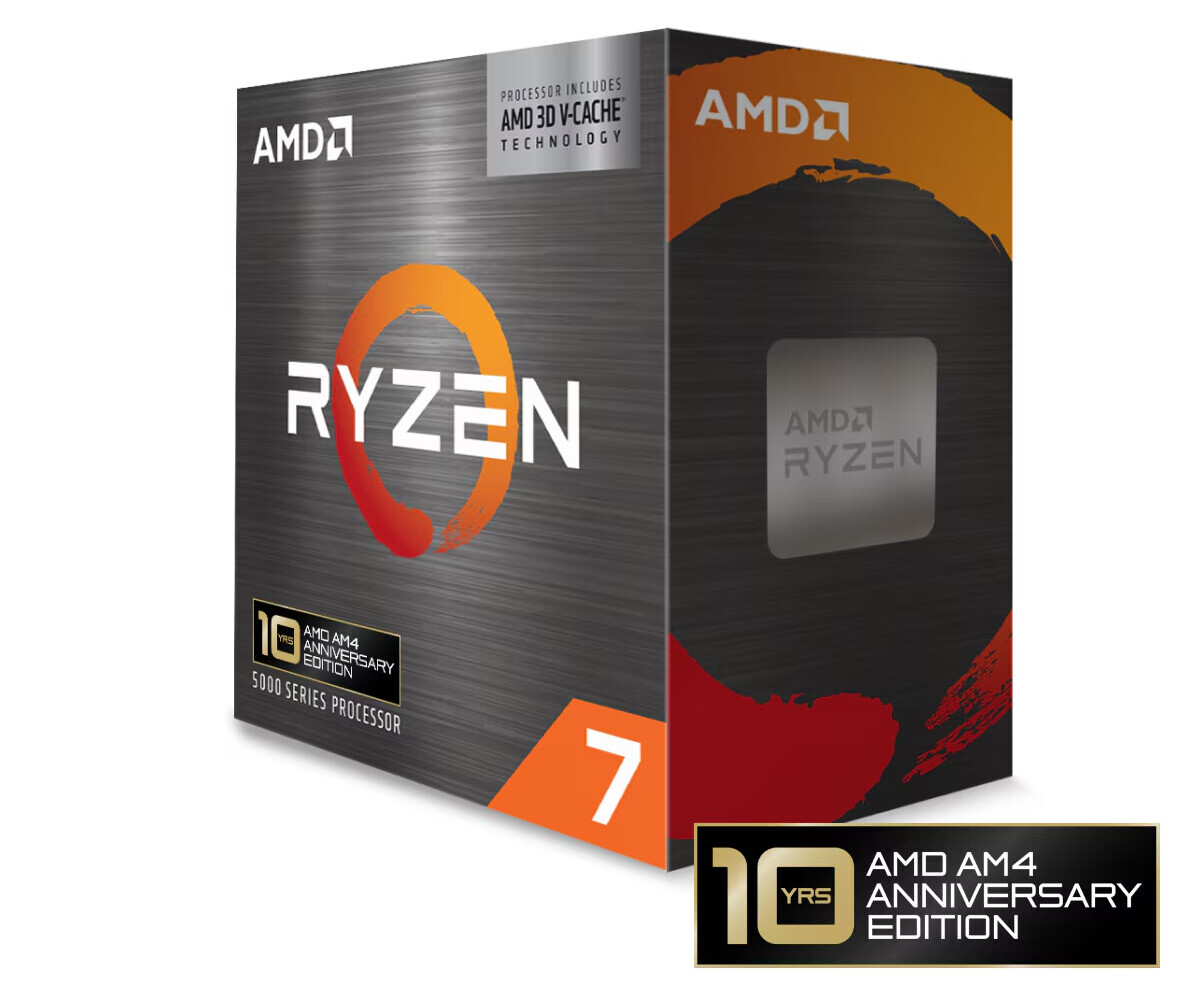
 Image: techpowerup.com
In the ever-evolving world of PC hardware, few CPUs achieve legendary status quite like the AMD Ryzen 7 5800X3D. Launched originally in 2022 as the first desktop chip with 3D V-Cache technology, it redefined gaming performance on the mature AM4 platform. Fast-forward to July 2026, and AMD has resurrected it as a 10th Anniversary Edition to celebrate a decade of AM4, complete with re-engineering for modern production and a tempting $349 price tag. With DDR5 prices soaring and many builders clinging to affordable DDR4 setups, is this reborn legend still the ultimate gaming upgrade, or has time finally caught up?
As a tech journalist who's tested countless chips, I dove into the latest benchmarks, real-world insights, and market context to deliver a critical review. Spoiler: for the right user, it punches far above its age. Let's break it down.
Specs, Re-Engineering, and the 2026 Comeback Story
The Ryzen 7 5800X3D remains an 8-core/16-thread Zen 3 (Vermeer) processor built on TSMC's 7nm process. Key specs include a 3.4 GHz base clock, up to 4.5 GHz boost, a massive 96MB L3 cache (thanks to the stacked 64MB 3D V-Cache on the CCD for ~100MB total cache), 4MB L2, and a 105W TDP. It requires a discrete GPU, supports DDR4 (up to 3200+ MT/s officially, higher with tuning), and drops into any AM4 motherboard with a BIOS update—no platform change needed.
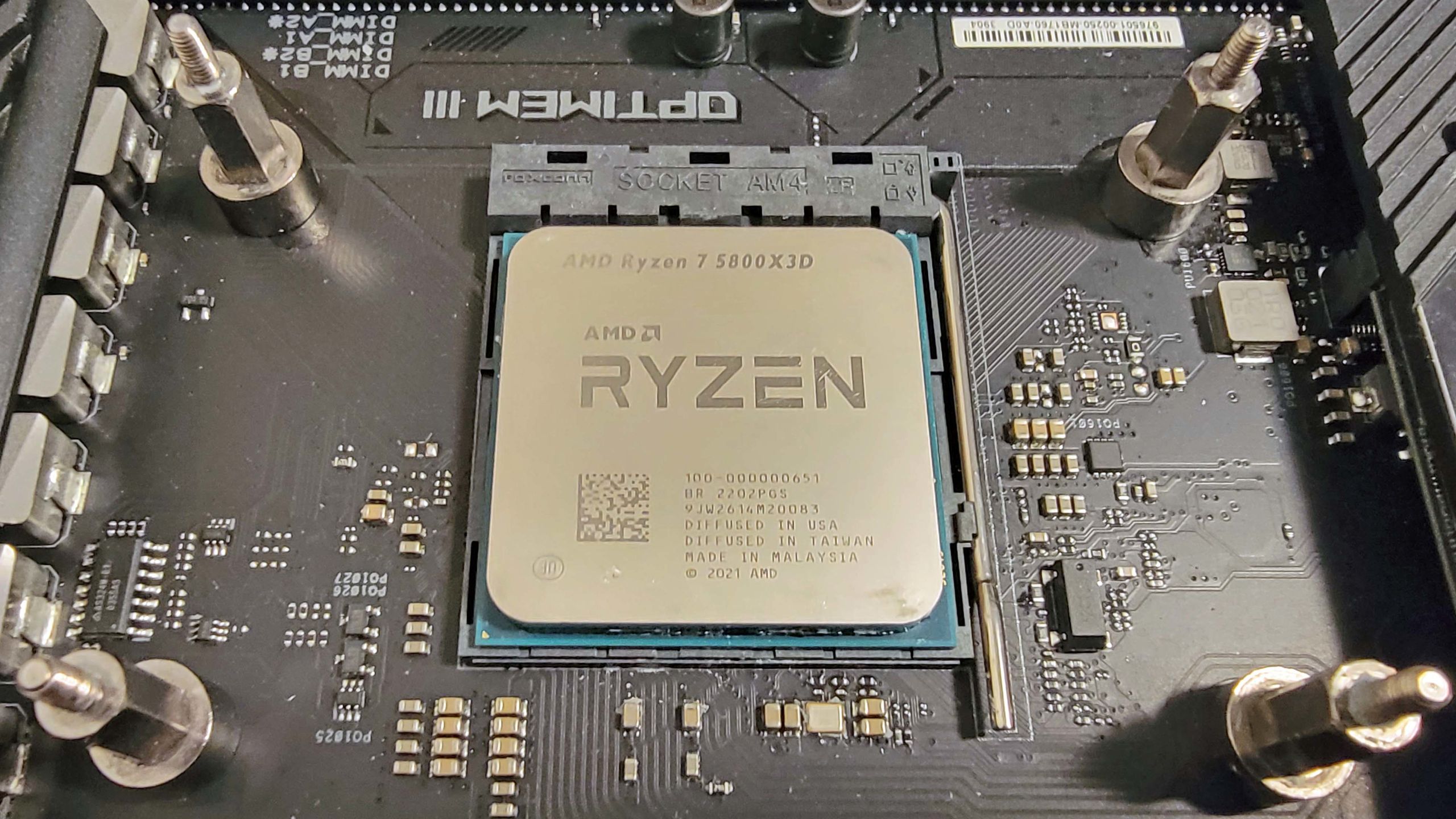 Image: tomshardware.com
What makes the 10th Anniversary Edition special? Unveiled at Computex 2026, it launched on June 25 at $349 MSRP (down from the original $449). AMD re-engineered the stacking process because TSMC's original first-gen hybrid bonding (SoIC) for the V-Cache was no longer available. Engineers adapted it to second-gen stacking, involving significant qualification and reliability testing—a "labor of love," according to AMD execs. Every unit includes a Carbice Ice Pad for improved thermal interface. Availability has been spotty due to high demand, with some scalping, but official channels list it around MSRP.[[1]](https://uk.pcmag.com/processors/165346/the-amd-ryzen-7-5800x3d-is-back-from-the-dead-but-i-wish-it-wasnt)
This isn't a paper launch; it's a genuine response to high DDR5 costs and lingering AM4 popularity. Practical tip: Pair it with a B550 or X570 board and fast DDR4-3600 CL14-16 kit for best results. Ensure your cooler handles 105W well—a good air cooler like a Peerless Assassin or 240mm AIO suffices, especially with the included pad.
Gaming Performance: Still a Cache-Fueled Monster
Where the 5800X3D shines—and why it earned its legend—is gaming, particularly at 1080p and 1440p where CPU and cache matter most. Recent 2026 re-tests (including with high-end GPUs like RTX 5090) show it remains the peak of DDR4 gaming performance. Across suites of modern titles like Cyberpunk 2077, Baldur's Gate 3, Counter-Strike 2, F1 24, and newer ones like Doom: The Dark Ages or Marvel Rivals, it often matches or edges out Intel's 13th/14th-gen chips (e.g., i7-14700K) on DDR4, and even competes with some non-X3D Zen 4/5 parts like the 9600X.[[2]](https://www.techspot.com/review/3077-amd-ryzen-am4-5800x3d-5700x3d/)
The 3D V-Cache delivers superior 1% lows and consistency, reducing stuttering in cache-sensitive games. In TechSpot's 14-game average (Medium settings, early 2026), it matched the Core i5-14600K and 9600X while trailing the 9800X3D by about 35% (or ~28% at Ultra, where GPU limits apply). Tom's Hardware noted it as marginally faster than Raptor Lake on DDR4 and highly efficient, drawing ~77W average under load—half the power of competing Intels for similar frames.[[3]](https://www.tomshardware.com/pc-components/cpus/amd-ryzen-7-5800x3d-2026-cpu-review/2)
It's not invincible. Newer titles optimized for DDR5 bandwidth can widen the gap (up to 15-30% in some cases for DDR5 platforms). Versus AMD's own Ryzen 5 7600X3D (~$230 + DDR5), it trails by around 18%, and productivity apps favor higher-clocked or multi-core modern chips. Overclocking is locked (no PBO on X3D for cache protection), so you're stuck with stock boosts. Still, for pure gaming on existing hardware, few chips deliver this smoothness.
Tip: Enable EXPO/DOCP for RAM and use the latest AGESA BIOS. Monitor temps—re-engineering may subtly affect thermals, but stock coolers handle it fine under 90°C.
Pros, Cons, Value, and Practical Insights
Pros:
- Unmatched gaming performance and frame consistency on AM4/DDR4 platforms.
- Excellent efficiency and power draw.
- Drop-in upgrade—keeps your existing motherboard, cooler, and cheap DDR4 alive.
- Re-release addresses availability; includes quality thermal pad.
- Still competitive with mid-range 2025-2026 CPUs in games at lower resolutions/high refresh rates.
Cons:
- Aged architecture: 8 cores limit heavy multitasking, content creation, or AI workloads compared to 12+ core modern chips.
- $349 feels steep for 2022 tech when a 9700X or 7600X3D + entry DDR5 can offer better all-around/platform future-proofing for similar or slightly more money.[[3]](https://www.tomshardware.com/pc-components/cpus/amd-ryzen-7-5800x3d-2026-cpu-review/2)
- No integrated graphics, locked clocks, end-of-life platform (AM5 supported through at least 2029).
- Stock can be limited; secondary market prices sometimes inflate.
Value hinges on your setup. If you're on a Ryzen 3000/5000 AM4 system with a solid GPU (e.g., 7800 XT or better), this is a fantastic $300-350 upgrade that revitalizes your rig without the full platform cost of AM5 (board + DDR5, which can add $150-300+ amid shortages). For new builds, skip it—go AM5 for longevity. Versus used originals (often $300+), the new Anniversary Edition with pad is preferable. Practical insight: Calculate total platform cost. A 7600X3D + cheap DDR5 kit might only be $80 more and ~18% faster in games while unlocking upgrades.
Who Should Buy It and Final Tips
Buy the 5800X3D if: You have an AM4 board and want max gaming FPS/1% lows without rebuilding; you're budget-conscious on memory costs; or you play competitive esports/high-refresh titles. Skip if starting fresh, do heavy productivity, or can stretch to a 7800X3D/9800X3D/9700X.
Tips: Source from reputable retailers to avoid scalpers. Update BIOS before install. Pair with a strong cooler and fast dual-channel DDR4. Test with tools like CapFrameX for 1% lows. In a market of rising prices, AMD's move keeps AM4 viable—smart for gamers.
Verdict: A Worthy Resurrection for the Right Crowd
The AMD Ryzen 7 5800X3D 10th Anniversary Edition proves legends never die—they just get re-engineered. In 2026, it remains an outstanding pure-gaming CPU for AM4 holdouts, delivering buttery performance and efficiency that shame some newer mid-rangers. However, its age, limited cores, and pricing relative to AM5 options prevent a perfect score. For upgrades, it's excellent value; for new systems, look forward.
Overall quality is high for its niche. If AMD keeps supporting these special editions amid component shortages, expect more such smart plays. The 5800X3D isn't the absolute fastest anymore, but it's still a king of its domain—highly recommended with caveats.