 Image: keeptrack.space
As of November 1, 2026, not a single Starmind satellite is in orbit. That has not stopped SpaceX from treating orbital AI compute as the chapter after Starlink. The company has asked U.S. regulators for authority to operate as many as one million solar-powered data-center satellites, locked in Nvidia as the partner for the first design, and pointed to a Texas factory that could start turning spacecraft out by late 2027. Elon Musk’s latest line is characteristically blunt: terrestrial data centers will look like “peanuts” next to what he expects to deploy in space.
What Starmind is, and what it is not
Starmind is SpaceX’s name for a planned constellation of orbital AI data centers. The label stuck in June 2026 after an xAI trademark filing and a one-word confirmation from Musk on X. It is not a consumer broadband product. Starlink moves bits. Starmind is meant to process them.
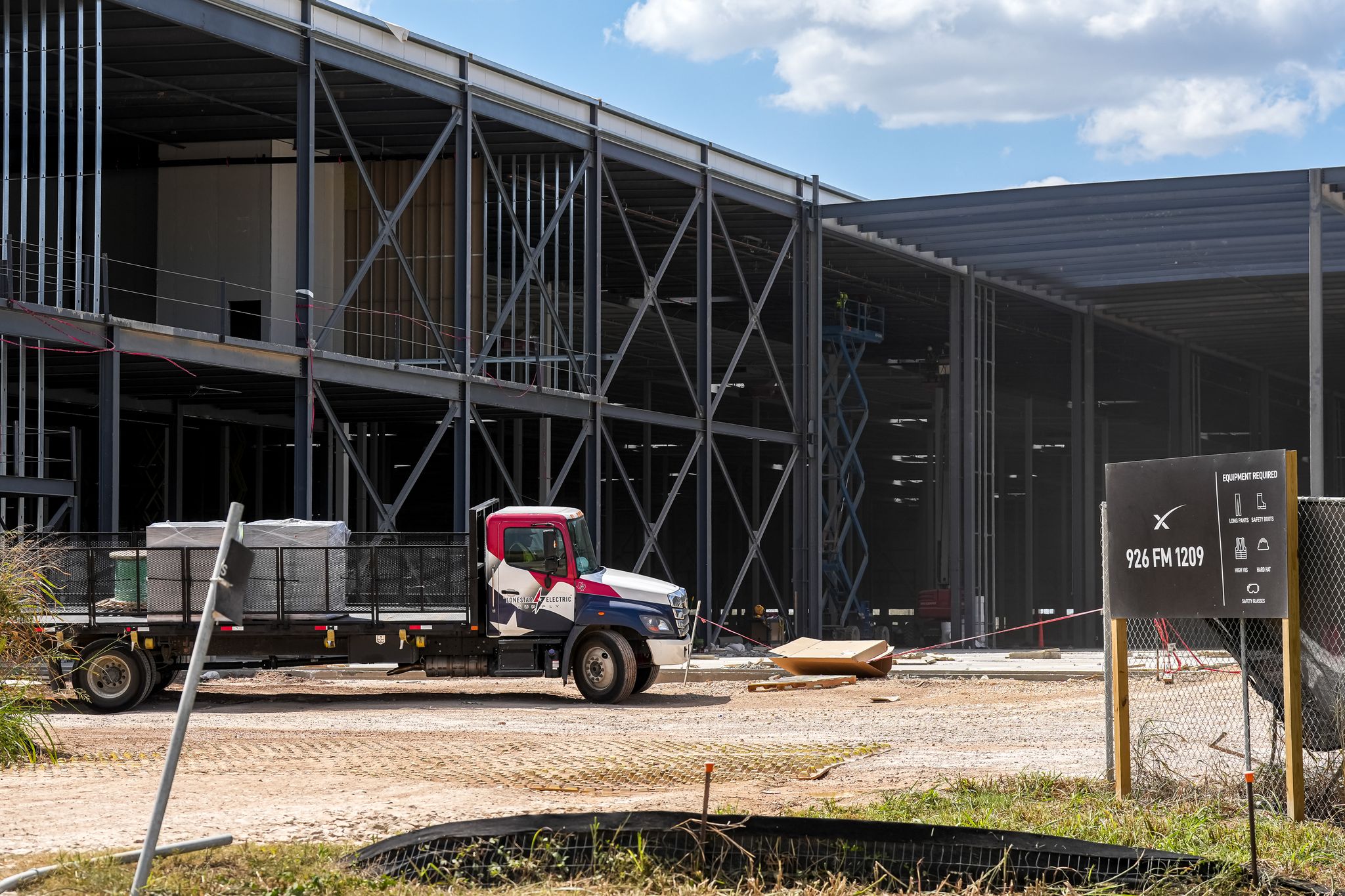 Image: statesman.com
The concept first showed up in a January 30, 2026 application to the Federal Communications Commission for what SpaceX called the Orbital Data Center system. The FCC’s Space Bureau accepted that filing for public comment on February 4. Acceptance starts a review. It is not a license to launch a million spacecraft. Public trackers in mid-October still listed zero Starmind satellites and zero dedicated launches.
The engineering pitch is simple enough to explain and hard enough to build. Ground data centers are colliding with power, water, land, and local opposition. In sun-synchronous orbit, a satellite can stay in sunlight, draw power from large solar arrays, and reject waste heat into vacuum without chillers, cooling towers, or a zoning board. SpaceX says that approach cuts cooling-power overhead by an order of magnitude compared with a terrestrial hall. Finished results would travel back to users over laser links and the Starlink network already in low Earth orbit.
The AI1 satellite and the Nvidia payload
The first spacecraft design is called AI1. SpaceX’s published targets describe a vehicle with a 75-meter (246-foot) wingspan and a deployed height of about 30 meters (98 feet)—closer to a small industrial building than to a conventional communications satellite. Compute is rated at up to 250 kilowatts at peak and 175 kilowatts on average, with a claimed efficiency around 75 kilowatts per tonne. The power and thermal package includes a solar array on the order of 210 kilowatts and a 160-square-meter deployable liquid radiator. Musk has also said each craft would carry more than 250 kilowatts of solar power. These are company design targets, not measurements from hardware that has already flown.
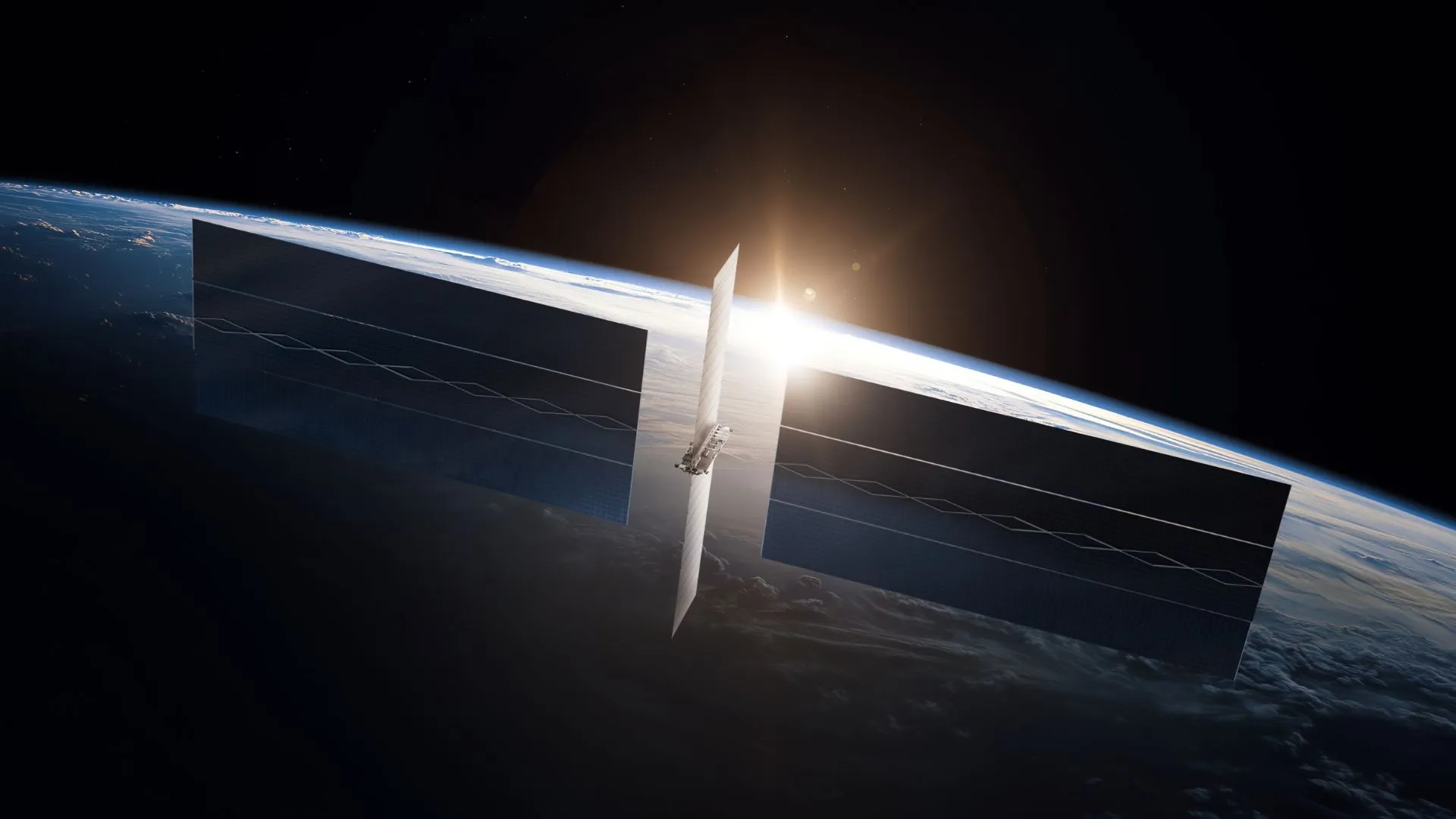 Image: interestingengineering.com
In August 2026, SpaceX and Nvidia said the first-generation compute payload would be built around an optimized Vera Rubin NVL72-class system: 72 Rubin GPUs, 36 Vera CPUs, an NVLink interconnect, and a BlueField 4 data processing unit, sized for that same 250-kilowatt peak and 175-kilowatt average budget. Musk has said SpaceX chose Nvidia GPUs because “they are the best,” even though the company’s architecture description calls the system chip-vendor agnostic. On October 15 he wrote that the computer being co-engineered with Nvidia was “far better than almost anyone expects” and would reach volume production in 2027.
Clusters of ten, not a million isolated servers
A million independent servers is the wrong mental model. In early October, SpaceX vice president Michael Nicolls—who also leads xAI—described the operating concept at the International Astronautical Congress and on a new Space Safety page. Starmind satellites would fly in tight clusters of about ten, linked by roughly 10 terabits of bandwidth, then interconnect to the wider constellation. At the full filing scale, that is closer to 100,000 coherent compute nodes than to a million standalone machines.
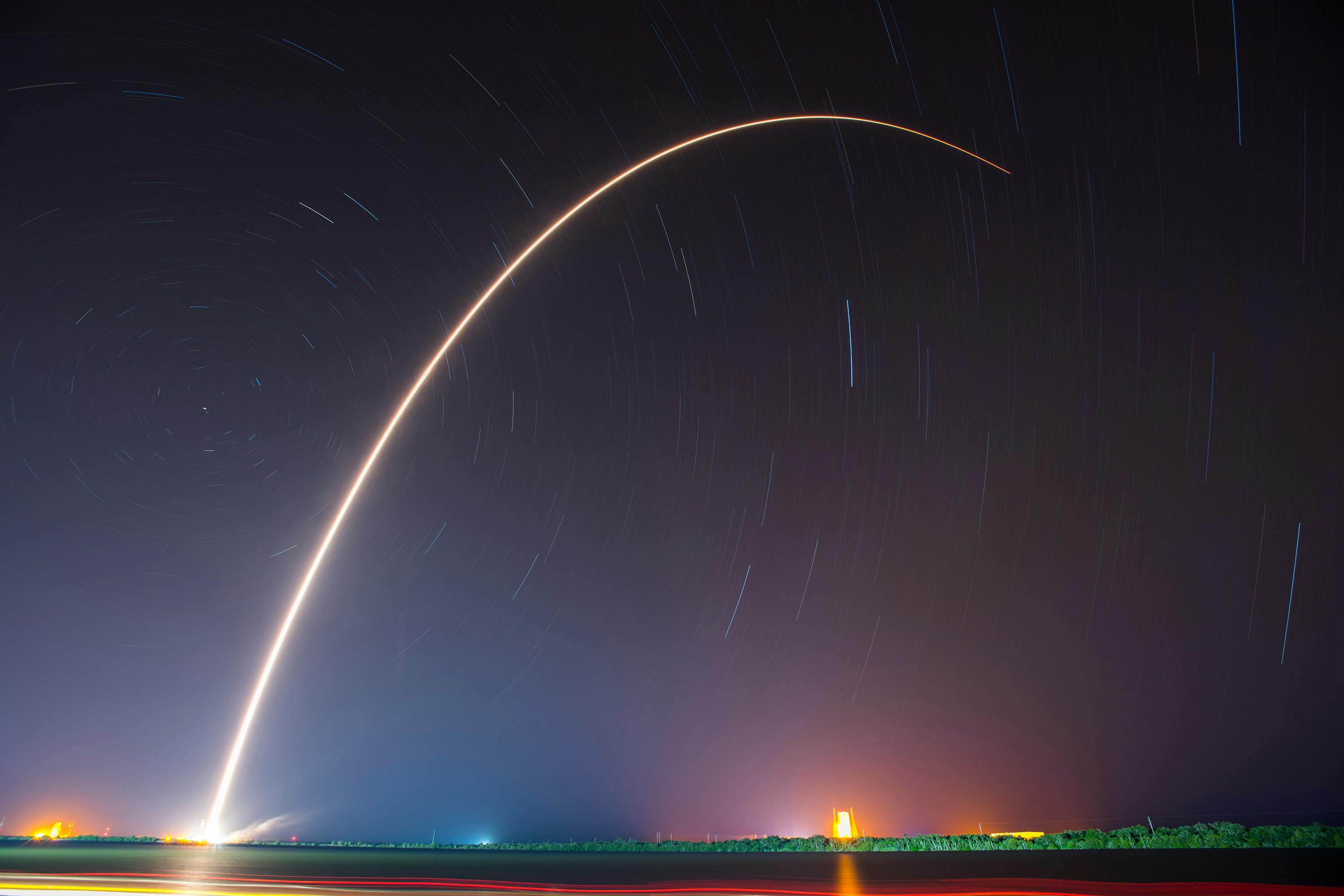
About half the proposed satellites would use sun-synchronous orbits so they remain in sunlight for energy-hungry, always-on workloads. The rest would occupy other shells between roughly 500 and 2,000 kilometers, shifting load to match available power. High-speed lasers would move intermediate results between satellites and hand outputs to Starlink for the trip to Earth. Starship is the assumed launcher. Earlier descriptions put 30 to 50 AI1-class satellites on a single flight.
On October 6, SpaceX put the scale in writing: up to 100,000 Starlink satellites and up to 1 million Starmind satellites to meet demand for broadband and “supercompute.” Starlink already has a little more than 11,000 spacecraft on orbit, so the broadband target alone is roughly a ninefold expansion. The same page pressed other operators to share maneuver data, arguing that coordination at this density only works if everyone publishes what their satellites are doing. Formation flight adds a specific problem: conjunction-screening systems will have to tell planned proximity apart from a real collision risk.
Factories, rockets, and a 2028–2029 bet
Manufacturing is supposed to happen at the Gigasat Factory in Bastrop, Texas, next to SpaceX’s existing Starlink production complex east of Austin. The company says the plant is meant to support rapid production and deployment of thousands of AI satellites starting as soon as late 2027. Local reporting has described a campus on the order of 11 million square feet with substantial on-site solar-cell capacity, though county permit timelines lagged the public announcements earlier in the year. Prototype flights have been discussed for early 2027, with fuller AI1 vehicles targeted toward the end of that year. Commercial-scale orbital compute is more often framed as a 2028 story.
Launch rate is the constraint that keeps resurfacing. Analyst models circulating in late October assumed Starship flights rising from a handful this year toward dozens in 2027 and on the order of 250 in 2028. SpaceX has separately talked about weekly Starship launches in the first half of 2027, with a faster tempo after that. Without that cadence, a million-satellite filing stays a filing. A second Starbase concept in Louisiana, with a first launch eyed for 2029, has been described as additional capacity for the same AI-satellite ambition.
Money is moving on the ground first. SpaceX has been building terrestrial compute—Musk confirmed a new $40 billion debt raise to buy GPUs—and has guided toward 13 gigawatts or more of compute by the end of 2027. Over the last few days of October and into November 1, Musk argued that this ground buildout is a bridge, not the destination. “Terrestrial compute will be peanuts compared to orbital compute,” he wrote, adding that monthly orbital deployments could surpass terrestrial additions around the end of 2028 and pull far ahead in 2029. His response to outside capital-spending models was shorter: “I think we can do better.”
What to watch, and what not to believe yet
None of this is an operating network. The FCC has not authorized the full system. Radiation tolerance, thermal control, and the near-impossibility of swapping a failed GPU rack in orbit remain open engineering problems. Astronomers have already noted that a sun-synchronous shell at this scale would look like artificial rings around Earth. Competitors are not waiting on the sidelines either. A Google Project Suncatcher prototype, built with Planet to study AI hardware in space, rode a SpaceX rideshare on October 1, 2026, and the company said it had established contact. That experiment is a different weight class from AI1, but it shows orbital AI is no longer a single-company sketch.
A few practical filters help separate the schedule from the renderings:
- Treat published kilowatt figures as design targets until a satellite flies and reports real power and thermal performance.
- Watch FCC dockets, not just videos. Acceptance for filing is not a grant of authority.
- Follow Starship cadence and recovery attempts. Starmind’s timeline collapses if the rocket does not fly often and cheaply.
- Look for Gigasat construction milestones in Bastrop, and for any early compute test payloads on Starlink satellites, before assuming full AI1 vehicles are imminent.
- Keep the product boundary clear. Starmind is meant to sell compute. It will not replace a home Starlink dish or magically raise your download speed.
Starmind is still a plan with a factory site, a chip partner, a regulatory filing, and a launch vehicle that has not yet shown the flight rate the constellation requires. It is also the clearest statement yet of where SpaceX thinks the AI power problem gets solved: not by another substation on Earth, but by putting the servers where the sunlight does not set. If 2027 prototypes work and Starship scales, Musk’s claim that orbital compute overtakes the ground buildout before the decade is out stops being a slogan and becomes a schedule. Until then, the most accurate status line is the one public trackers already show. Satellites in orbit: zero. Ambition on paper: one million.