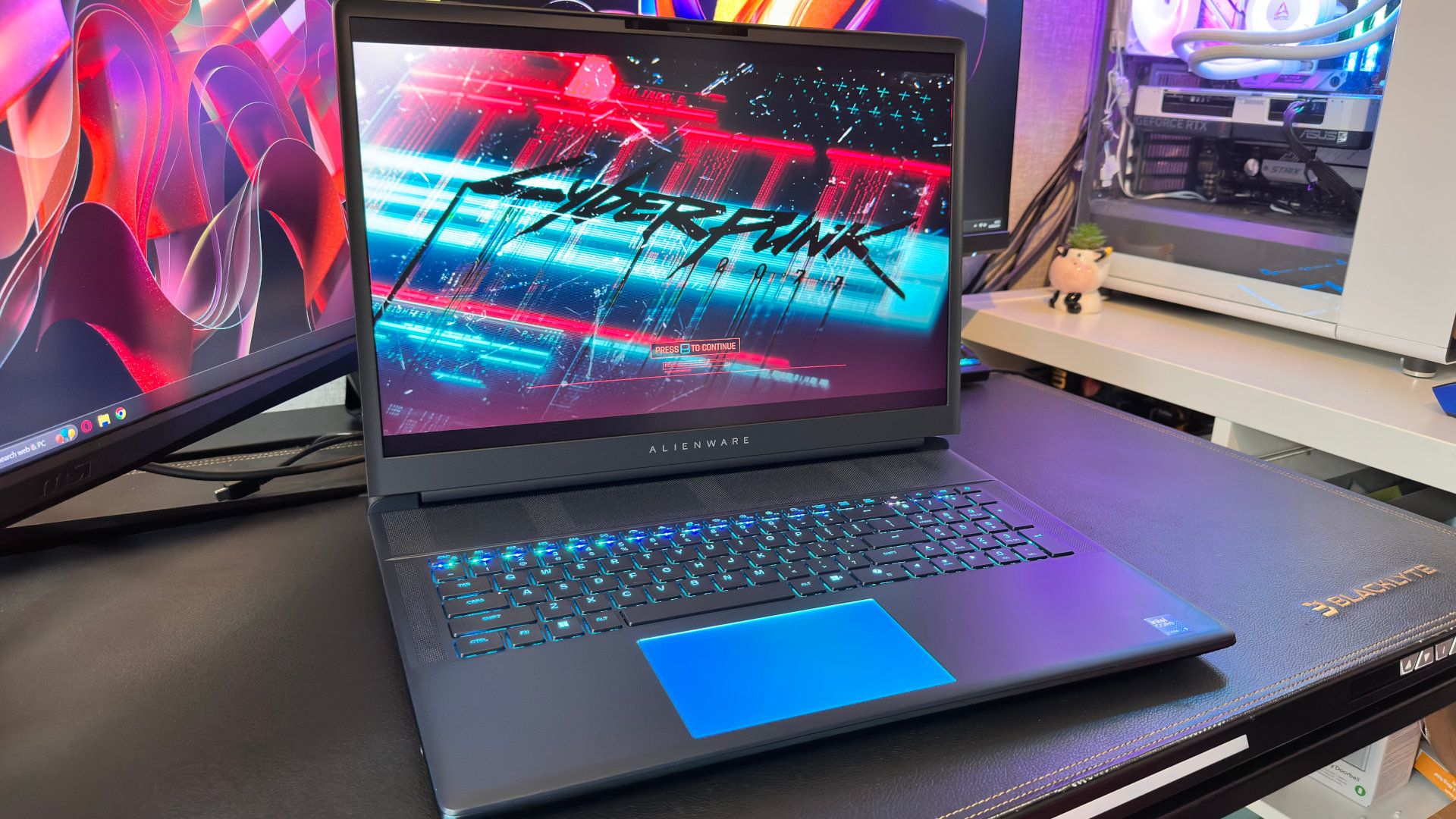
 Image: pcgamer.com
As a tech journalist who's tested dozens of high-end gaming laptops, the Alienware 18 Area-51 stands out as one of the most ambitious desktop replacements of the past year. Reviving the legendary Area-51 name for 2025 (with 2026 refreshes), this 18-inch behemoth from Dell's Alienware brand promises desktop-class performance in a (somewhat) portable form. With the current date being March 2026, we've seen the initial 2025 launch followed by CES 2026 updates adding refined Intel Core Ultra 200HX processors. But does this hulking machine deliver on its extraterrestrial hype?
In this full review, I'll break down the design, display, performance, thermals, and value based on hands-on testing and critical consensus from sources like RTINGS.com, PCMag, HotHardware, and PC Gamer. Spoiler: it's a high-scoring performer that excels where it counts most for enthusiasts, but it's not without compromises.
Design and Build: Bold, Beautiful, and Built Like a Tank
The Alienware 18 Area-51 embraces a dramatic new design language that feels fresh yet true to the brand's sci-fi roots. Available in striking Liquid Teal, the chassis features angular lines, extensive RGB lighting, and a premium aluminum-magnesium build that screams high-end. At roughly 9.5 pounds and over an inch thick, it's undeniably a desktop replacement rather than a travel companion. Don't expect to toss this in a backpack for casual use.
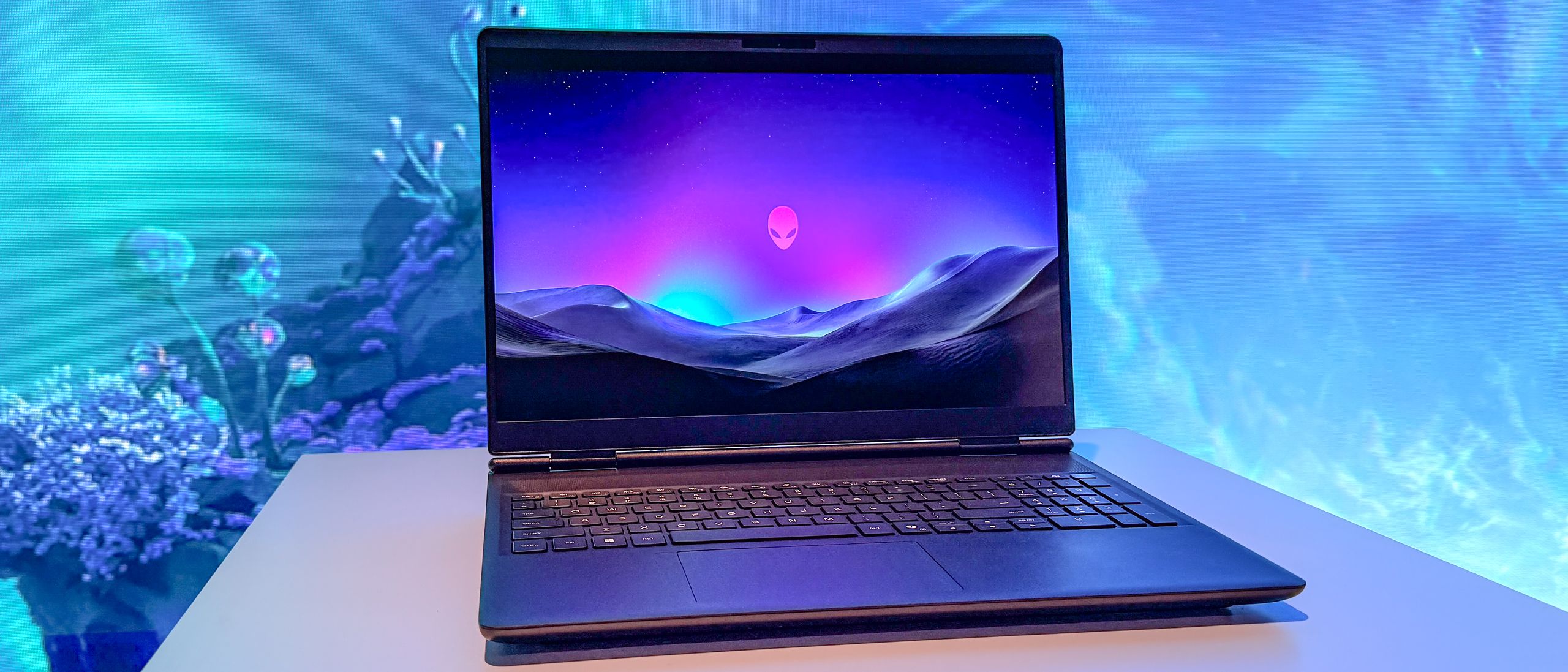 Image: tomsguide.com
One standout is the thoughtful port placement—mostly rear-facing—including Thunderbolt 4/5 USB-C ports, HDMI 2.1, Ethernet, SD card reader, and multiple USB-A ports. This keeps cables out of your gaming space. Expandability is excellent too: user-replaceable RAM (up to 64GB DDR5-6400) and multiple M.2 PCIe Gen4 SSD slots (supporting up to 12TB total in some configs) make this future-proof. Practical tip: Buy a mid-tier config and upgrade storage/RAM yourself to save hundreds.
Recent developments at CES 2026 confirmed minor spec bumps with new Intel silicon, but the core AW30-inspired design remains. It's gorgeous under RGB lighting, with an optional RGB-illuminated trackpad adding flair. Build quality is top-tier—solid with minimal flex.
Display and Input: Big Screen Gaming Done Right (With Caveats)
The 18-inch 2560x1600 (QHD+) IPS panel runs at 300Hz with 500 nits brightness, G-Sync support, and 100% DCI-P3 coverage. Colors pop for gaming and content creation, and the high refresh rate delivers silky-smooth gameplay in fast-paced titles. Anti-glare coating helps in brighter rooms.
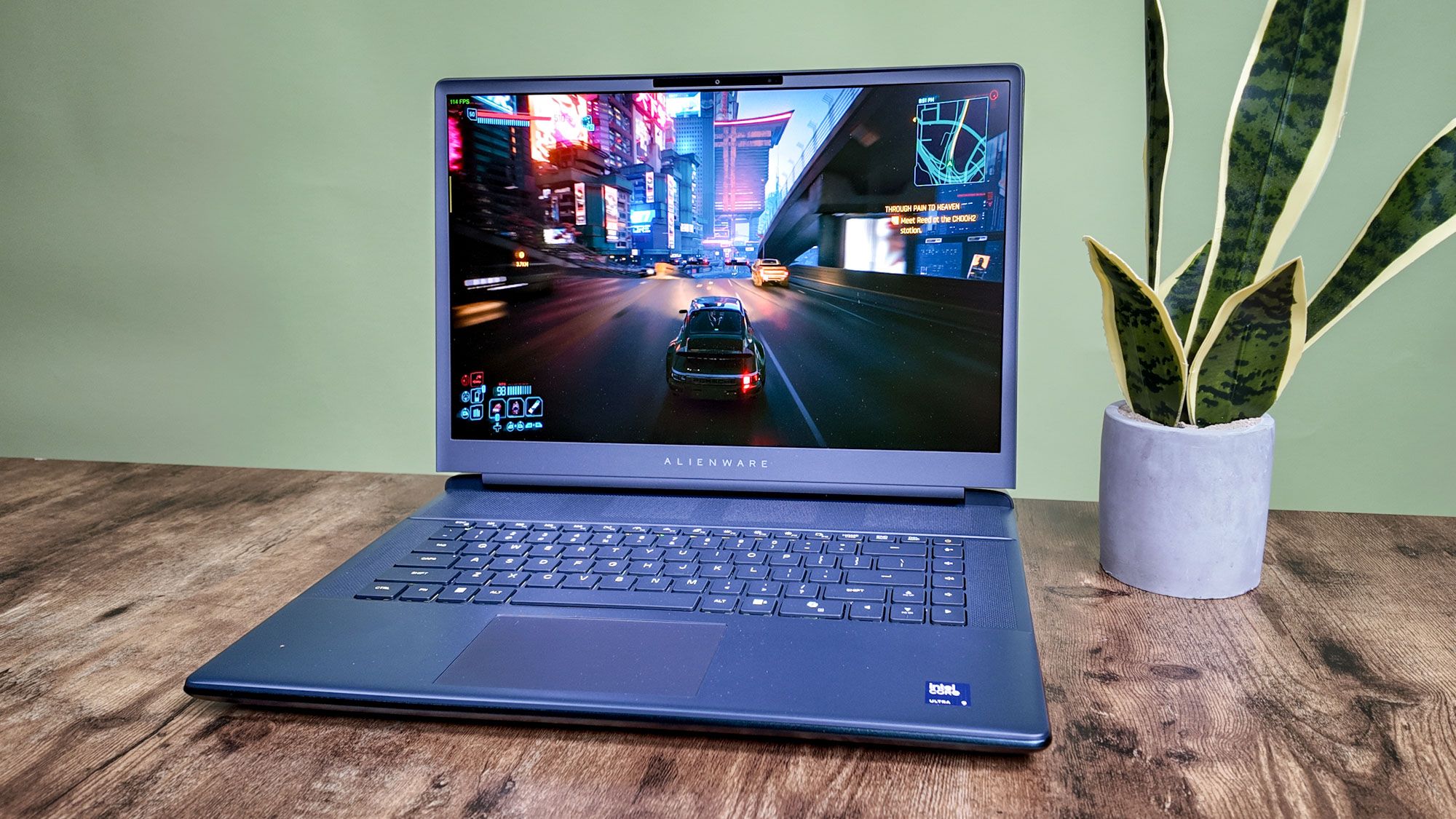 Image: tomsguide.com
However, like many IPS panels, contrast is mediocre—blacks appear gray in dark environments, making it less ideal for movies in dim lighting. No OLED option exists for the 18-inch model even in 2026 (that's reserved for the 16-inch sibling), which is a notable miss compared to rivals. It's bright and responsive but not class-leading for media consumption.
The keyboard is a highlight. You can spec it with Cherry MX low-profile mechanical switches for satisfying tactile feedback—rare in laptops this size. It's comfortable for long sessions with good travel and spacing. The touchpad is large and responsive, though the RGB elements are more show than practical daily use.
Performance and Thermals: A Benchmark Beast That Stays Composed
Equipped with an Intel Core Ultra 9 275HX (up to 24 cores) and up to GeForce RTX 5090 Laptop GPU (with 175W+ TGP in high configs), the Alienware 18 Area-51 delivers crushing performance. In tested configs with RTX 5080, it handles AAA games at high settings with frame rates exceeding 100+ fps at native resolution. Ray tracing and DLSS 4 shine here.
What impresses most is the thermal design. With advanced vapor chamber cooling and multiple fans, it runs surprisingly cool and quieter than expected for its power level. Reviews consistently praise minimal thermal throttling compared to bulkier competitors like the MSI Titan 18 HX. CPU and GPU stay in efficient ranges even during extended sessions, making it great for sustained workloads like video editing or 3D rendering alongside gaming.
Practical insight: For most users, the RTX 5080 configuration offers the best balance of performance and cost. The full RTX 5090 shines in 4K external monitor setups or future-proofing. Battery life is predictably poor—around 3 hours for light use—requiring the massive power brick for anything demanding. This is a plugged-in powerhouse.
Value, Portability, and Real-World Use
Pricing starts around $2,400 for solid base models but quickly climbs to $4,000+ for top specs with the mechanical keyboard and maxed RAM/storage. It's expensive, but you get premium components, excellent upgradability, and that unique Alienware styling. Compared to the Lenovo Legion 9i or Asus ROG Scar 18, the Area-51 often wins on thermals and noise levels.
The biggest drawbacks are its weight (nearly 10 pounds) and size, making it impractical for commuters. If portability matters, look at the 16-inch Area-51 instead. For stationary gamers wanting one machine to replace a desktop PC and monitor, it's compelling. Recent 2026 updates with refined processors keep it competitive without a full redesign.
Who should buy it? Hardcore enthusiasts, content creators needing a big screen and power, or those building a dedicated gaming station. Skip if you need something travel-friendly or have a tight budget.
Final Verdict
The Alienware 18 Area-51 excels as a no-compromises 18-inch gaming laptop with standout cooling, robust performance, and eye-catching design. While the heavy weight, short battery, high price, and IPS contrast limitations hold it back from perfection, its strengths make it one of the best desktop replacements available in early 2026.
Critical consensus from major outlets highlights its gaming prowess and refinement over raw competitors. If you're ready to embrace its size, this Alienware delivers an out-of-this-world experience.