 Image: teslarati.com
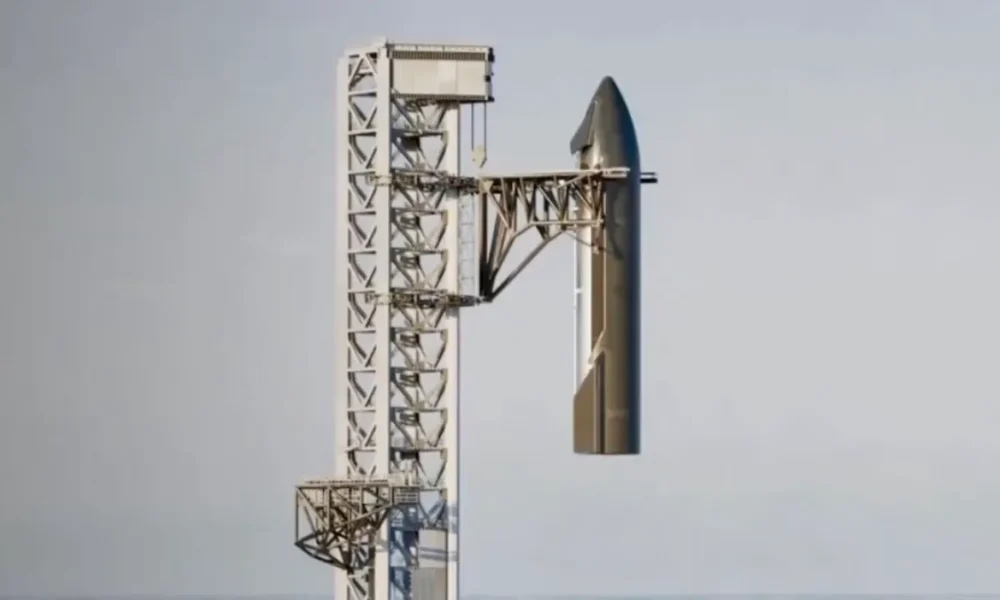
On the afternoon of November 14, 2026, the sky above Starbase, Texas, delivered a moment no orbital rocket program had ever achieved. After more than 22 hours in space, SpaceX’s Starship upper stage—Ship 42—descended through the atmosphere, flipped upright on three Raptor engines, and was caught mid-air by the launch tower’s massive mechanical arms. The chopsticks, long nicknamed Mechazilla, closed around a spacecraft returning from orbit for the first time. The triumph arrived one day after the mission’s Super Heavy booster aborted its own tower catch and exploded just above the Gulf of Mexico.
The First Catch of a Starship Returning from Orbit
Flight 15 lifted off from Pad 2 at Starbase at 5:47 p.m. EDT on November 13 under the power of 33 Raptor engines. Hot-staging separated the stages cleanly, and Ship 42 continued to orbit. After deploying its payload, the ship coasted through roughly 14 orbits while controllers monitored systems for more than 20 hours. Heat-shield imagery from ground cameras and from cameras on three of the deployed satellites looked healthy enough for teams to skip early splashdown options and commit to a return to the launch site.
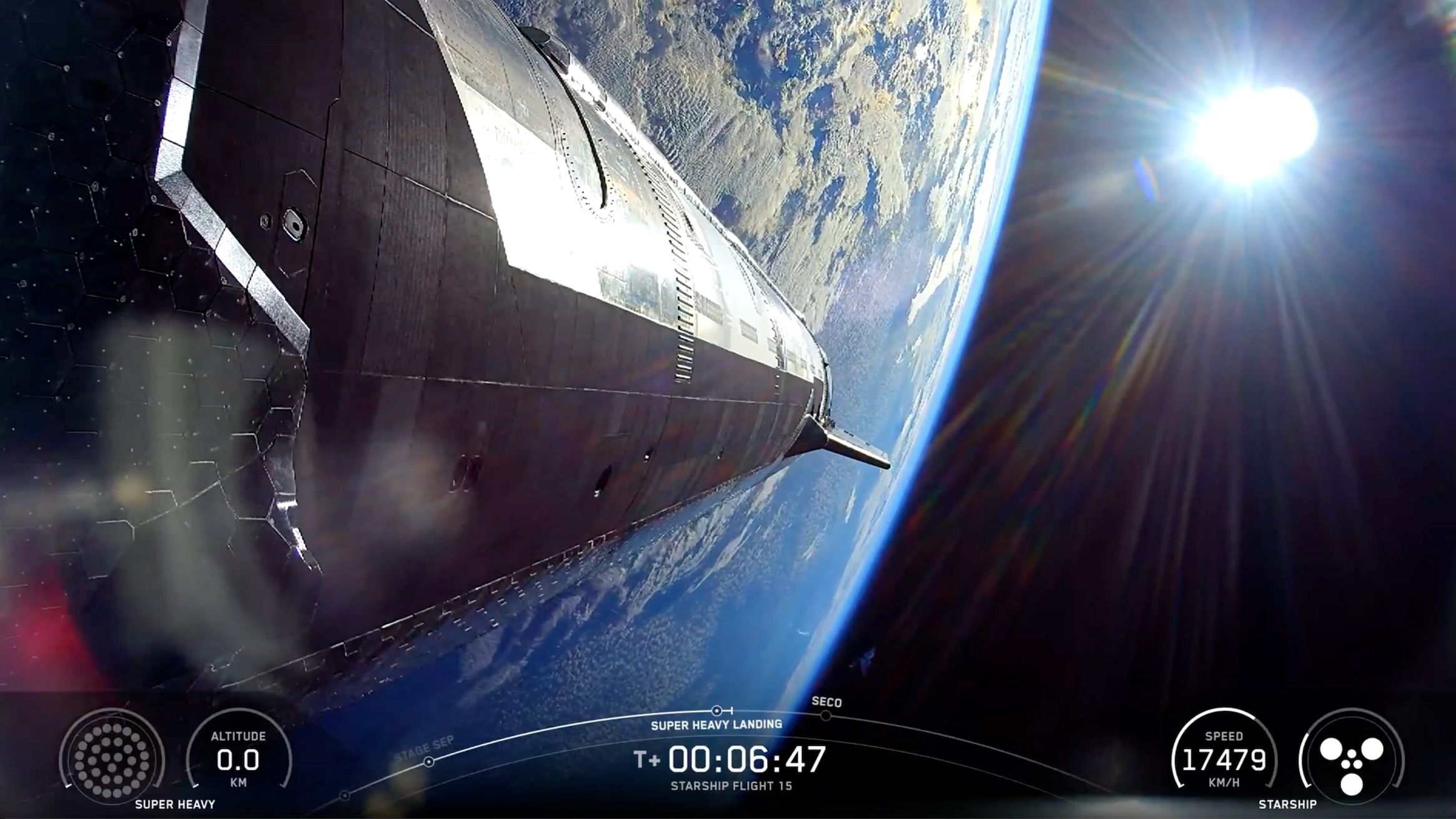 Image: space.com
On Saturday the ship relit a single sea-level Raptor for its deorbit burn, reentered, flew a final swoosh maneuver over the Gulf, and approached the same tower it had left 22.5 hours earlier. Three Raptors ignited for the landing flip and a slow descent. The arms closed and caught the vehicle. SpaceX confirmed the milestone on X with the message “Mechazilla catches Starship!” The catch occurred at approximately 4:20 p.m. EST.
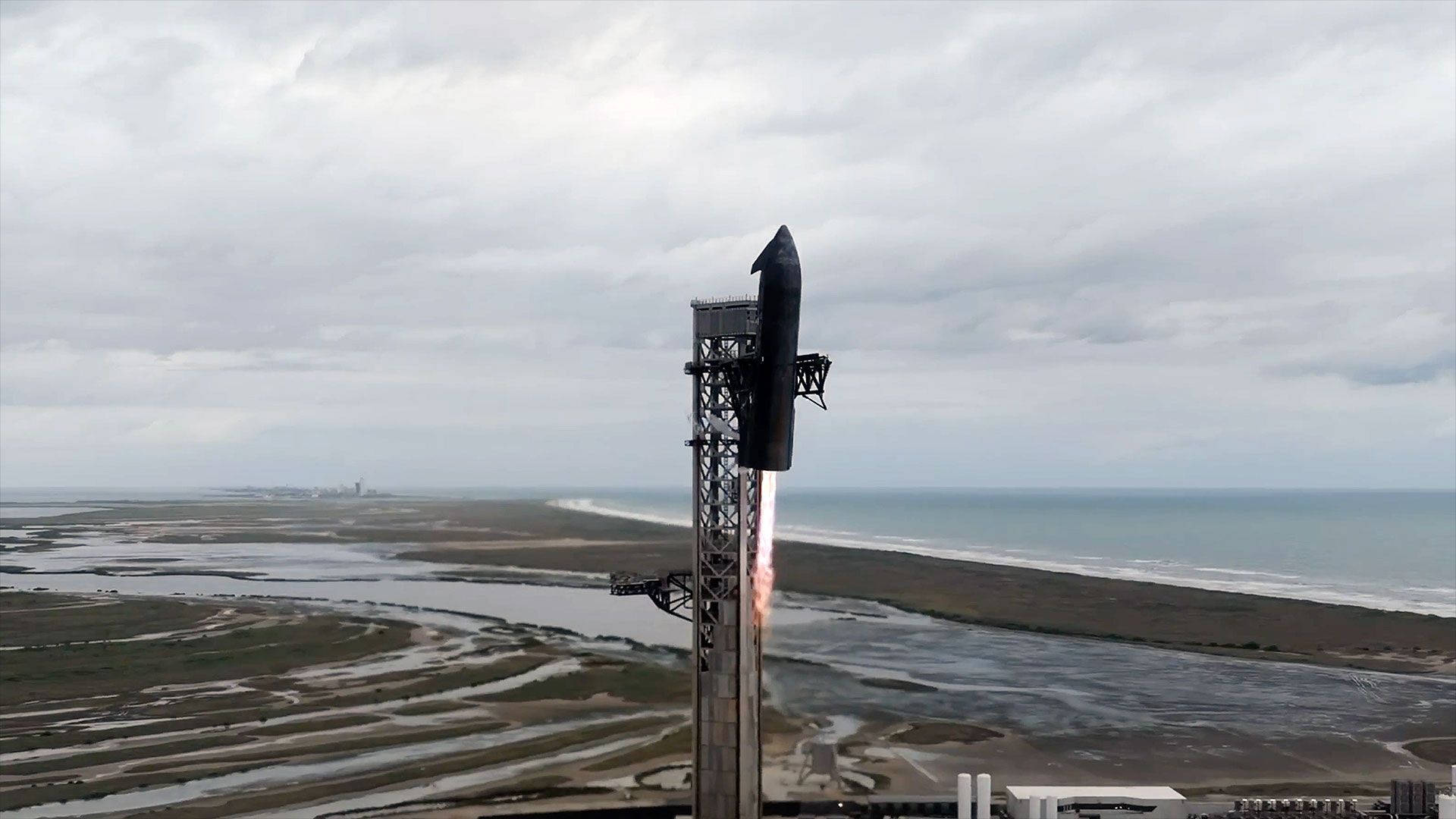 Image: space.com
SpaceX has already caught Super Heavy boosters three times—on Flights 5, 7, and 8—but never the upper stage after an orbital mission. The Ship must survive peak heating behind its tiled heat shield, manage a precise flip from a belly-flop attitude, and arrive within meters of the tower after traveling around the world. Flight 15 proved that sequence can work.
Why Booster 22 Never Reached the Tower
The flight had been planned as the first double catch—an attempt to recover both stages of an orbital rocket on the same mission and the first catch try for a Version 3 Super Heavy. That half of the plan ended minutes after liftoff.
After stage separation, Booster 22 relit 32 of 33 Raptors for its boostback burn. According to SpaceX, the burn ended early because of a low-fuel-mass condition; the root cause remains under investigation. Guidance, navigation, and control software detected that the booster was not in the correct position and energy state for a safe tower approach. It automatically aborted the catch and diverted offshore, exactly as the contingency logic is designed to do.
The booster still executed a landing burn, hovered briefly over a designated zone in the Gulf, and shut down its engines. Its flight termination system then activated. The vehicle exploded a few feet above the waves roughly 6.5 minutes after liftoff. Early commentary from SpaceX’s Dan Huot described a guidance issue; he later clarified that the guidance system had performed as intended by triggering the abort once it saw the booster was out of the catch corridor. Commentator Kate Tice subsequently said early indications pointed to the boostback ending early on a low fuel mass alarm. Elon Musk later noted that the booster had been slightly low on propellant after engines slightly underperformed, and that improved engine consistency plus a software change to shut engines down about a second earlier are the identified fixes.
The automated divert kept the booster away from the tower and nearby communities. It was still a lost vehicle and the end of the first attempt to recover both stages together.
Orbit, Satellites, and a Record-Length Mission
While the booster was lost, Ship 42 delivered its core objectives. It completed a nominal ascent, performed an orbital insertion burn, and deployed all 26 Starlink V3 satellites—the first full operational load of the larger next-generation spacecraft flown on Starship. Contact was established with every satellite, which began raising their orbits to join the constellation. Three of those satellites carried cameras that photographed the ship’s heat shield and helped clear the vehicle for the long coast and eventual catch attempt.
The mission lasted approximately 22.5 hours and covered about 14 orbits near 275 kilometers altitude. That made it the longest Starship flight to date and only the second time the vehicle has reached orbit. Flight 14 in September reached orbit but ended after roughly three hours with a Pacific splashdown following engine issues. Flight 15 therefore advanced both duration and recovery in a single test.
- Liftoff: 5:47 p.m. EDT, November 13, 2026, from Starbase Pad 2
- Booster outcome: boostback ended early on low fuel mass; automated offshore divert; flight termination system activated about 6.5 minutes after launch
- Payload: all 26 Starlink V3 satellites deployed and contacted
- Ship profile: roughly 14 orbits, then deorbit, reentry, and tower catch
- Catch time: approximately 4:20 p.m. EST on November 14
Why Catching the Ship Changes the Economics
Rapid reuse of both stages is the foundation of nearly everything SpaceX intends to do with Starship. Falcon 9 already reflies its first stage routinely but discards the upper stage on every launch. A catchable, reflown Ship would let the company loft dozens of high-capacity Starlink V3 satellites per flight at far lower marginal cost, accelerating growth of a constellation that already exceeds 11,000 satellites. V3 spacecraft are larger than earlier versions and are not efficiently launched on Falcon rockets, so Starship is the intended workhorse.
The same capability underpins NASA’s Artemis plans. Starship is the Human Landing System intended to carry astronauts from lunar orbit to the Moon’s surface. That architecture requires multiple tanker flights to refuel a lander in Earth orbit—only practical if vehicles can be turned around quickly. Musk has also linked full Starship reuse to longer-term goals of moving large numbers of people and cargo to Mars. NASA Administrator Jared Isaacman congratulated the team after the catch, calling it a step closer to those ambitions. Musk said the booster loss does not change the company’s timeline toward high-volume reusable flights.
The successful heat-shield performance and controlled return after a full day in orbit also remove a major uncertainty that had lingered after earlier, shorter flights. Demonstrating that a Ship can leave, work, and come home to the same tower is a prerequisite for operational cadence.
What to Watch on the Flights Ahead
Starship development remains iterative, and Flight 15 illustrated both the progress and the remaining work. Expect a detailed investigation of the low-fuel-mass event before the next Version 3 booster catch attempt. The Ship catch, meanwhile, gives engineers a recovered orbital vehicle to inspect and, eventually, the data needed to attempt reflights and another dual-recovery mission.
Practical ways to follow the program:
- Primary coverage appears on SpaceX’s official livestreams via X and the company website; detailed commentary often runs in parallel on Space.com and specialist channels.
- Residents near Starbase and along the South Texas coast should expect possible sonic booms on return attempts; local notices typically precede the events.
- Engine-out counts, heat-shield photos, and go/no-go calls during coast phases are usually shared first in webcast updates rather than formal releases—those details often explain why a catch is attempted or waved off.
- Even when a recovery is aborted, successful payload deployment of Starlink V3 satellites remains a concrete measure of progress toward routine high-capacity launches.
The chopsticks have now caught both a Super Heavy booster and a Starship upper stage. The next clear milestone is doing both on the same flight, then repeating the feat often enough that the vehicles shift from experimental hardware to transportation. Flight 15 did not deliver the perfect double catch, yet it delivered proof that a spacecraft can reach orbit, deploy a commercial payload, survive a day in space, and return to the tower that launched it. The Gulf holds what remains of Booster 22. The tower at Starbase holds a Ship that flew to orbit and came home. For the first time, both halves of the reusability problem have been solved—just not yet on the same day.