 Image: techcrunch.com
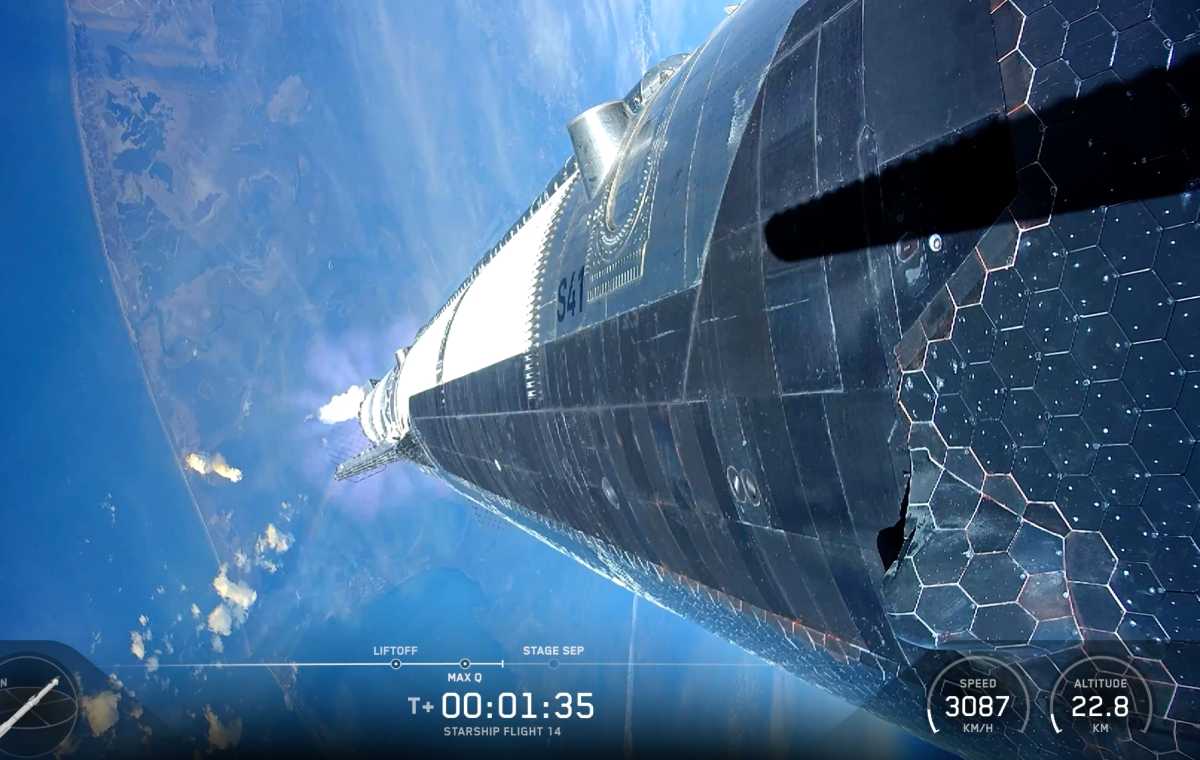
SpaceX crossed a long-awaited threshold on Monday when Starship Flight 14 lifted off from Starbase in South Texas and became the first vehicle in the program to reach a sustained Earth orbit. The uncrewed mission, flown by Ship 41 atop Super Heavy Booster 21, also marked Starship’s debut as an operational launcher by releasing 26 next-generation Starlink V3 satellites. An early engine shutdown complicated the ascent, and flight controllers shortened the planned multi-orbit profile, yet the ship still completed a controlled reentry and splashdown roughly three hours after liftoff.
The flight is the clearest signal yet that the world’s largest and most powerful rocket is moving from pure developmental testing toward the cadence SpaceX needs for Starlink expansion, NASA lunar missions, and eventual full reusability.
Liftoff, an Engine Scare, and the First Orbit
Starship Flight 14 launched from Orbital Launch Pad 2 at Starbase during a 75-minute window that opened at 7:15 a.m. CDT. Liftoff occurred at approximately 7:46–7:49 a.m. CDT (12:46–12:49 UTC) on September 28, 2026, after the FAA issued launch and reentry authorization on September 26. The stacked vehicle stands about 124 meters (407 feet) tall and is powered by 33 Raptor 3 engines on the booster plus six Raptors on the ship.
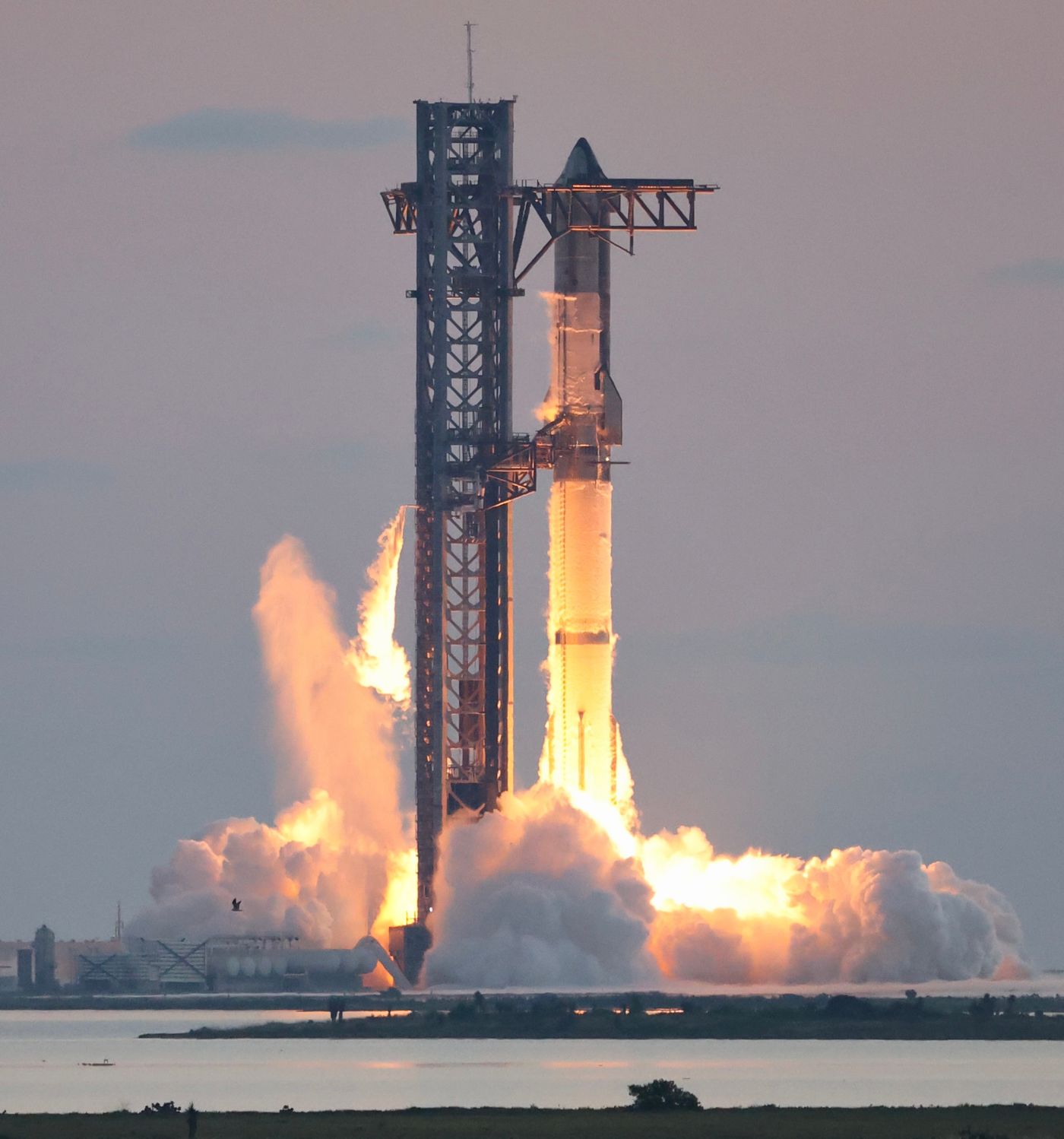 Image: spaceflightpedia.com
Hot staging went as planned roughly two and a half minutes after liftoff. Super Heavy then executed its boostback and landing burns before a controlled splashdown in the Gulf of Mexico. Not every engine relit perfectly—reports indicated a handful failed to restart—but the booster still completed the sequence.
The upper stage faced a more consequential issue. One of Ship 41’s Raptor engines shut down earlier than planned during the climb to space. SpaceX initially assessed that the vehicle might not proceed to orbit, then reversed course minutes later after telemetry showed sufficient redundancy. About 25 minutes after liftoff, a short orbital-insertion burn using a single engine circularized the trajectory at roughly 275 kilometers altitude. For the first time after 13 intentionally suborbital integrated flights, Starship was in orbit.
Starlink V3: Starship’s First Operational Payload
Once in orbit, Ship 41 deployed all 26 Starlink V3 satellites of Group 31-1. SpaceX confirmed contact with the satellites after they left the payload bay. Three of the spacecraft carried cameras aimed at the ship’s heat shield, giving engineers additional imagery of the thermal protection system while the vehicle was still in space.
Each V3 satellite is designed to add about 1 terabit per second of capacity to the constellation—26 Tbps from this single flight. SpaceX has said that volume is roughly ten times the capacity added by one Falcon 9 launch of earlier V2 Mini satellites. The company expects the new satellites to begin serving customers in the coming weeks, a meaningful step up in network throughput and a revenue-generating milestone for the Starship program itself.
- First operational Starlink deployment from Starship
- 26 V3 satellites, three instrumented for heat-shield imaging
- Approximately 26 Tbps of added constellation capacity
- Contact confirmed with the deployed satellites
Why the Mission Ended Early—and Why the Splashdown Still Mattered
The original plan called for roughly six orbits and nearly 10 hours in space, ending with a deorbit burn and splashdown in the Pacific west of Chile. After the ascent engine issue, controllers chose a more conservative path. The deorbit burn began a little over two hours into the flight—about six and a half hours earlier than the nominal timeline—and Ship 41 reentered, performed its landing flip and landing burn, and splashed down in the Pacific Ocean at approximately T+3 hours 8 minutes.
Multiple accounts, including detailed timelines attributed to SpaceX data, list the entry, transonic and subsonic transitions, flip, and splashdown as successful. The early return sacrificed the long coast phase that would have further stressed systems in orbit, but it still demonstrated the full chain SpaceX needs: orbital insertion, payload deployment, a single-engine deorbit burn, controlled atmospheric entry, and a soft ocean landing.
That sequence builds directly on Flight 13 in July 2026, when Ship 40 made an unusually soft Indian Ocean splashdown, remained afloat for an extended period, and was later recovered for inspection. Flight 14 did not attempt a tower catch of either stage; those more ambitious recoveries remain targeted for later flights, potentially as soon as Flight 15 depending on data review.
What This Means for NASA, Starlink Users, and the Road to Reuse
For NASA, an orbital Starship that can deploy payload and return under control reduces one of the larger technical uncertainties hanging over the Artemis architecture. A Starship-derived Human Landing System is central to the agency’s lunar plans, with an uncrewed low-Earth-orbit demonstration eyed for 2027 and a crewed landing attempt currently associated with Artemis IV in 2028. Orbital refueling—still unproven at the scale required—remains the harder follow-on problem, but Flight 14 shows the vehicle can at least reach and leave orbit with a real payload aboard.
Starlink customers stand to see the more immediate benefit. Higher-capacity V3 satellites should improve speeds and availability in congested cells once they are fully commissioned, and Starship’s payload volume is what makes launching them in large batches practical. If the heat-shield imagery and reentry data hold up under review, SpaceX can iterate faster toward the rapid reuse rates the business case demands.
Investors are watching the same milestones. This was the second Starship flight since SpaceX’s public listing, and the stock reaction on Monday reflected both the historic orbit achievement and the decision to cut the mission short. The company’s longer-term bet—thousands of Starship flights per year, including a planned second major launch complex—still depends on turning today’s partial successes into routine operations.
Practical Takeaways and What to Watch Next
Flight 14 did not deliver the full six-orbit profile, and engine reliability on both stages still needs work. It did, however, clear the single biggest gate the program had left in front of operational use: reaching orbit and putting paying hardware there.
For anyone following the program closely, a few practical points stand out:
- Watch the data, not just the highlight reel. Heat-shield camera views from the three instrumented Starlinks, plus post-splashdown analysis if recovery assets reach the ship, will shape tile and flap changes for the next vehicles.
- Starlink performance gains will lag the launch by weeks, not hours. Satellites must deploy arrays, establish links, and be commissioned before users notice higher capacity.
- Catch attempts are the next spectacle—and the next risk. A Gulf or Pacific splashdown that stays controlled is the prerequisite SpaceX has treated as necessary before trying to catch a ship or booster at the tower on an orbital mission.
- Livestreams remain the best public window. SpaceX’s own webcast, plus independent coverage from outlets that track Starbase continuously, typically carry the call-outs on engine counts, go/no-go decisions, and splashdown confirmation in near real time.
Starship Flight 14 will be remembered as the day the vehicle stopped being only a spectacular suborbital test article and started acting like a launcher. The engine hiccup and shortened flight are reminders that the system is still in development. The orbit, the satellites, and the controlled return are reminders of how far it has already come—and how much of NASA’s lunar timeline and SpaceX’s constellation growth now ride on the flights that follow.