 Image: wccftech.com
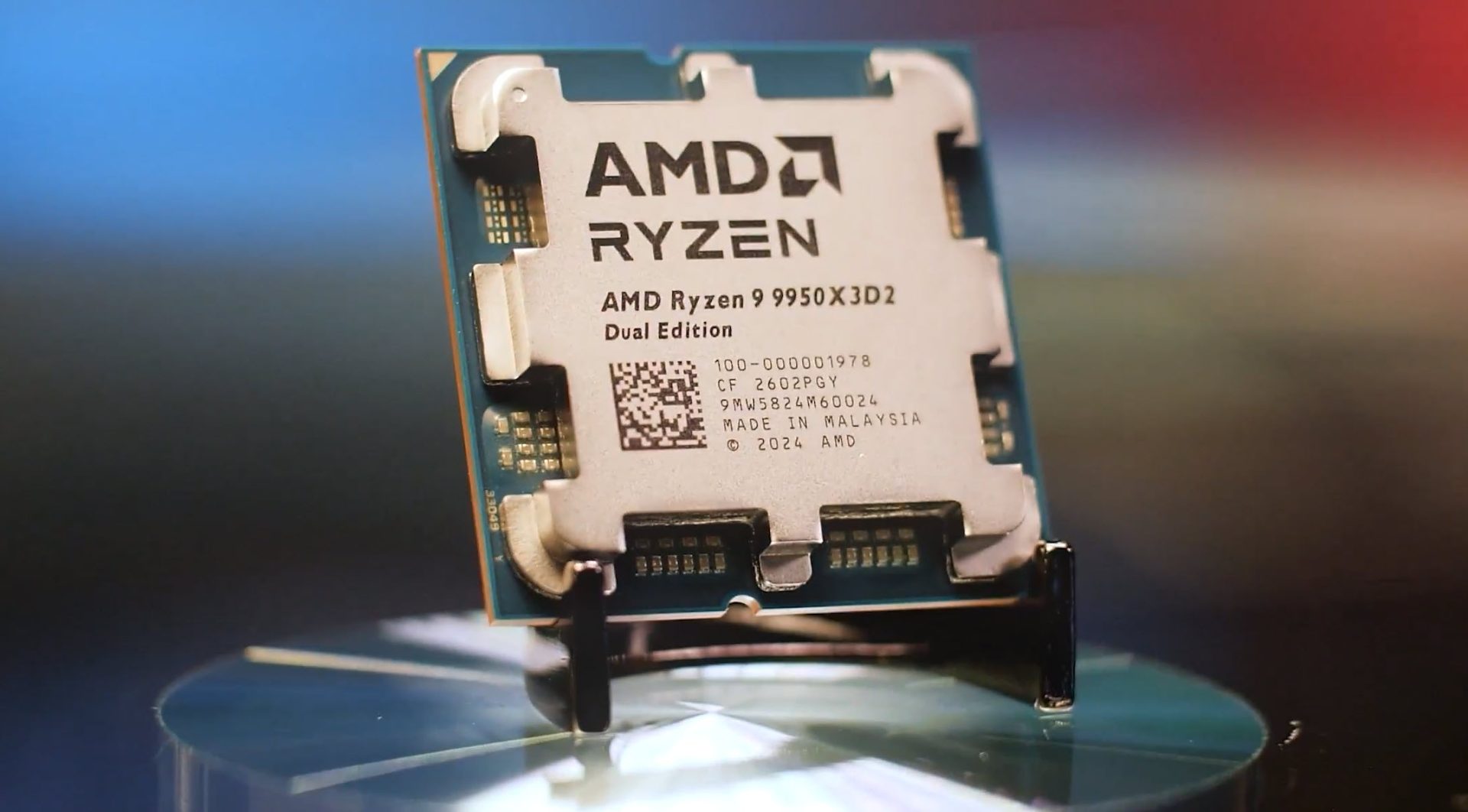
Just days ago on March 26, 2026, AMD dropped a significant bombshell in the world of high-performance computing. The company officially unveiled the Ryzen 9 9950X3D2 Dual Edition, billing it as the world's first desktop CPU with dual AMD 3D V-Cache technology. This isn't just another incremental update—it's a major leap in cache architecture that could redefine what's possible for content creators, developers, and enthusiasts pushing the boundaries of their hardware.
As we edge closer to April 22, the official release date, excitement is building around this enthusiast-grade processor. With 16 Zen 5 cores, 32 threads, and a staggering 208MB of total cache, the 9950X3D2 promises to deliver lower latency and higher throughput for cache-sensitive applications. But is it the ultimate upgrade for everyone, or a specialized tool for a niche audience? Let's dive into the details.
Breaking Down the Specs: What Makes the 9950X3D2 Special
The Ryzen 9 9950X3D2 builds directly on the Ryzen 9000-series foundation but takes the 3D V-Cache approach to the next level. It features 16 cores and 32 threads across two CCDs (Core Complex Dies), both of which now incorporate 64MB of stacked 3D V-Cache. This results in a total cache configuration of 208MB: 16MB of L2 cache plus 192MB of L3 cache.
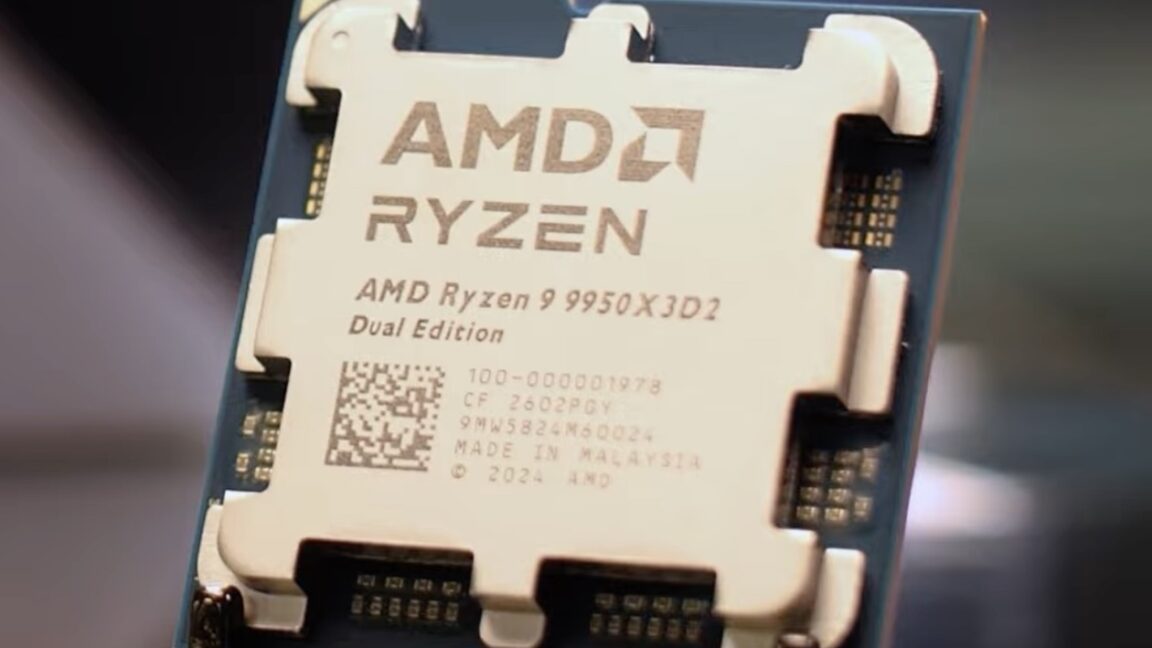 Image: arstechnica.com
Clock speeds come in at a base of 4.3 GHz and a max boost of 5.6 GHz—slightly lower than the 5.7 GHz on the standard 9950X3D, likely due to thermal and power considerations from the added cache layers. The TDP has been bumped up to 200W from 170W on its predecessor, signaling AMD's confidence in the cooling solutions available today.
- Architecture: Zen 5 with 2nd Gen 3D V-Cache across both CCDs
- Cache: 208MB total (16MB L2 + 192MB L3)
- Memory Support: DDR5 up to 5600MT/s, max 256GB
- Platform: AM5 socket, compatible with existing 600 and 800-series chipsets via BIOS update
- Graphics: Integrated Radeon Graphics (2 cores at 2200 MHz)
- Other Features: Unlocked for overclocking, Precision Boost Overdrive, Curve Optimizer, and full AMD Ryzen Master support
AMD has emphasized that this processor isn't just about raw clock speeds. The expanded on-chip memory is designed to keep more data closer to the cores, reducing latency in complex workflows like video editing with massive timelines, 3D rendering, software compilation, and scientific simulations.
The Dual 3D V-Cache Innovation: No More Compromises
Previous X3D models, including the Ryzen 9 9950X3D, used a hybrid approach—stacking the extra cache on only one of the two CCDs. This created situations where the OS had to "park" threads on the non-cached die for certain tasks, leading to inconsistent performance. The 9950X3D2 eliminates this entirely by equipping both dies with 64MB of 3D V-Cache.
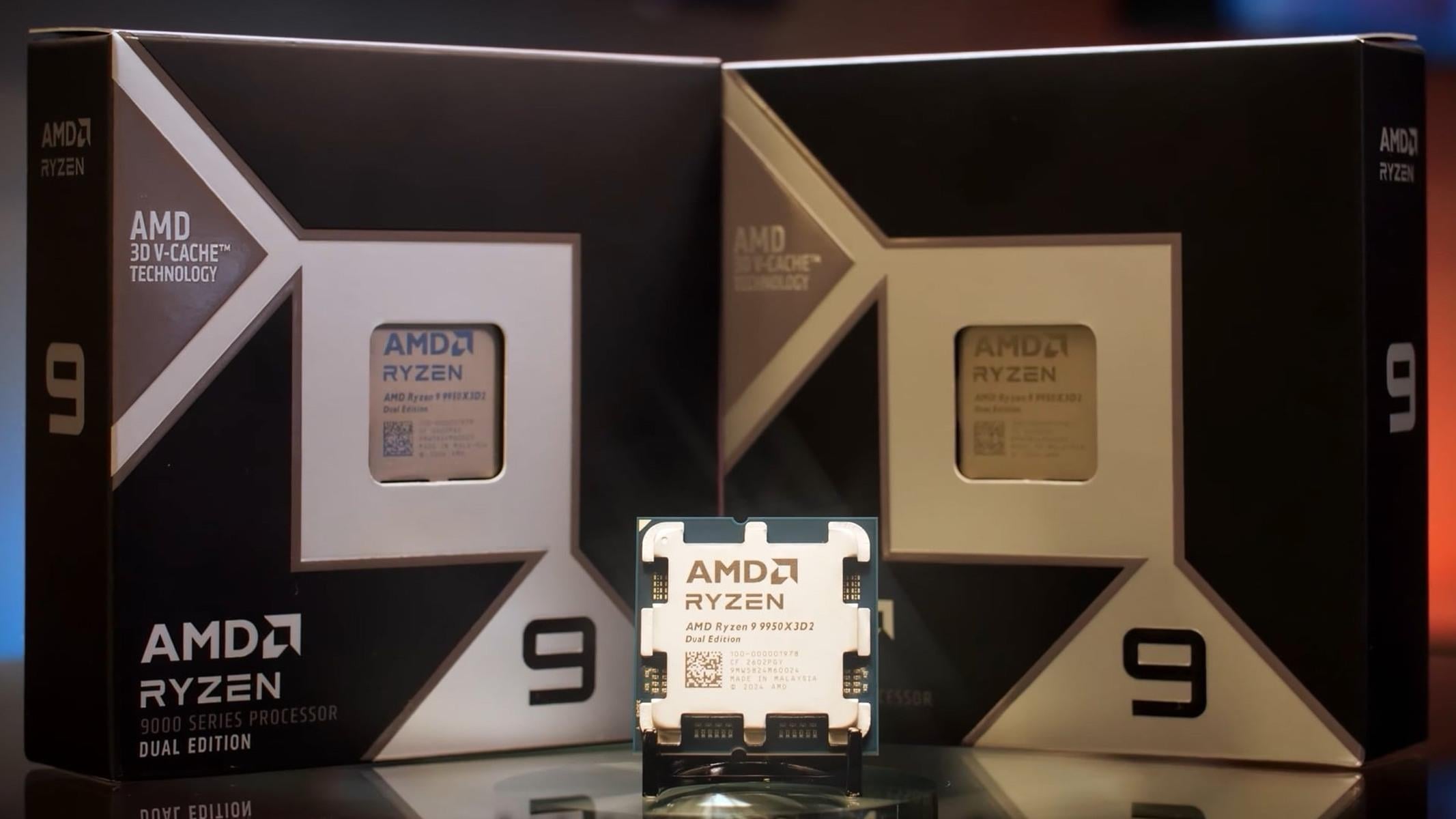 Image: hothardware.com
This symmetric design means all 16 cores can benefit equally from the massive cache pool. According to AMD, this results in 5-10% performance gains over the previous 9950X3D in games and applications that are sensitive to cache capacity and latency. While not revolutionary in every benchmark, the consistency across workloads is a big win.
The second-generation 3D V-Cache technology also improves thermal characteristics compared to first-gen implementations. By placing the cache beneath the compute die, heat dissipation is more manageable despite the higher 200W TDP. AMD recommends a liquid cooler for optimal performance, though high-end air coolers should suffice for most users.
Who Should Care? Target Users and Practical Insights
While AMD's X3D lineup is famous for gaming prowess, the Dual Edition is explicitly positioned for developers and creators. The marketing materials highlight use cases like handling large datasets, parallel builds, complex video timelines, and simulations where having more data on-chip translates directly to responsive performance.
For gamers, the benefits may be more modest—perhaps single-digit percentage uplifts in CPU-bound titles at high resolutions or with heavy mods and background tasks. However, the extra cache could shine in strategy games, simulation titles, or when streaming and recording simultaneously.
Practical tips for potential buyers:
- Ensure your AM5 motherboard has the latest BIOS for full compatibility. Most X670, B650, X870, and B850 boards should support it after a simple update.
- Invest in quality cooling—a 360mm AIO or better is ideal given the 200W TDP and 95°C max temperature.
- Pair it with fast DDR5 memory (EXPO profiles supported) and a high-end GPU to avoid bottlenecks in creative workloads.
- Consider your workflow: If you frequently deal with memory-intensive tasks that exceed standard cache limits, this CPU could save significant time.
Overclocking enthusiasts will appreciate that the chip remains fully unlocked. Tools like Ryzen Master, Precision Boost Overdrive, and Curve Optimizer allow fine-tuning for even better results, though the added cache layers may limit extreme frequency gains compared to non-X3D models.
Market Context and Future Implications
This launch comes at an interesting time for the CPU market. With Intel pushing its Core Ultra series and focusing on efficiency and AI features, AMD continues to double down on raw cache and multi-threaded performance for desktop users. The 9950X3D2 represents the pinnacle of the current Zen 5 generation before Zen 6 arrives (rumored for late 2027).
Pricing hasn't been officially revealed yet, but expectations put it in the $700-$900 range, positioning it as a premium option above the standard 9950X3D. Availability begins April 22, 2026, with boxed processors featuring distinctive monochrome packaging and "Dual Edition" branding.
Early indications suggest this chip excels in scenarios where previous hybrid X3D designs fell short. By removing the need for core parking and providing symmetric access to the massive cache, AMD has created a more predictable high-performance experience.
Is the Ryzen 9 9950X3D2 Dual Edition Right for You?
The AMD Ryzen 9 9950X3D2 Dual Edition isn't trying to be all things to all people. Instead, it delivers a specialized solution for users who can leverage enormous amounts of on-die cache. For professional creators working with large files, developers compiling massive codebases, or gamers who demand the absolute best in cache-heavy titles, this processor could be transformative.
While the performance uplift is described as modest in some scenarios (5-10%), the consistency and elimination of previous architectural compromises make it a compelling flagship. As more independent benchmarks emerge post-launch, we'll get a clearer picture of its real-world value.
One thing is certain: AMD continues to innovate in the desktop CPU space, pushing the boundaries of what's possible with 3D stacking technology. Whether you're planning a new build or considering an upgrade, the 9950X3D2 Dual Edition is worth watching closely as April approaches. The future of high-cache computing is here, and it's dual-sided.