 Image: wccftech.com
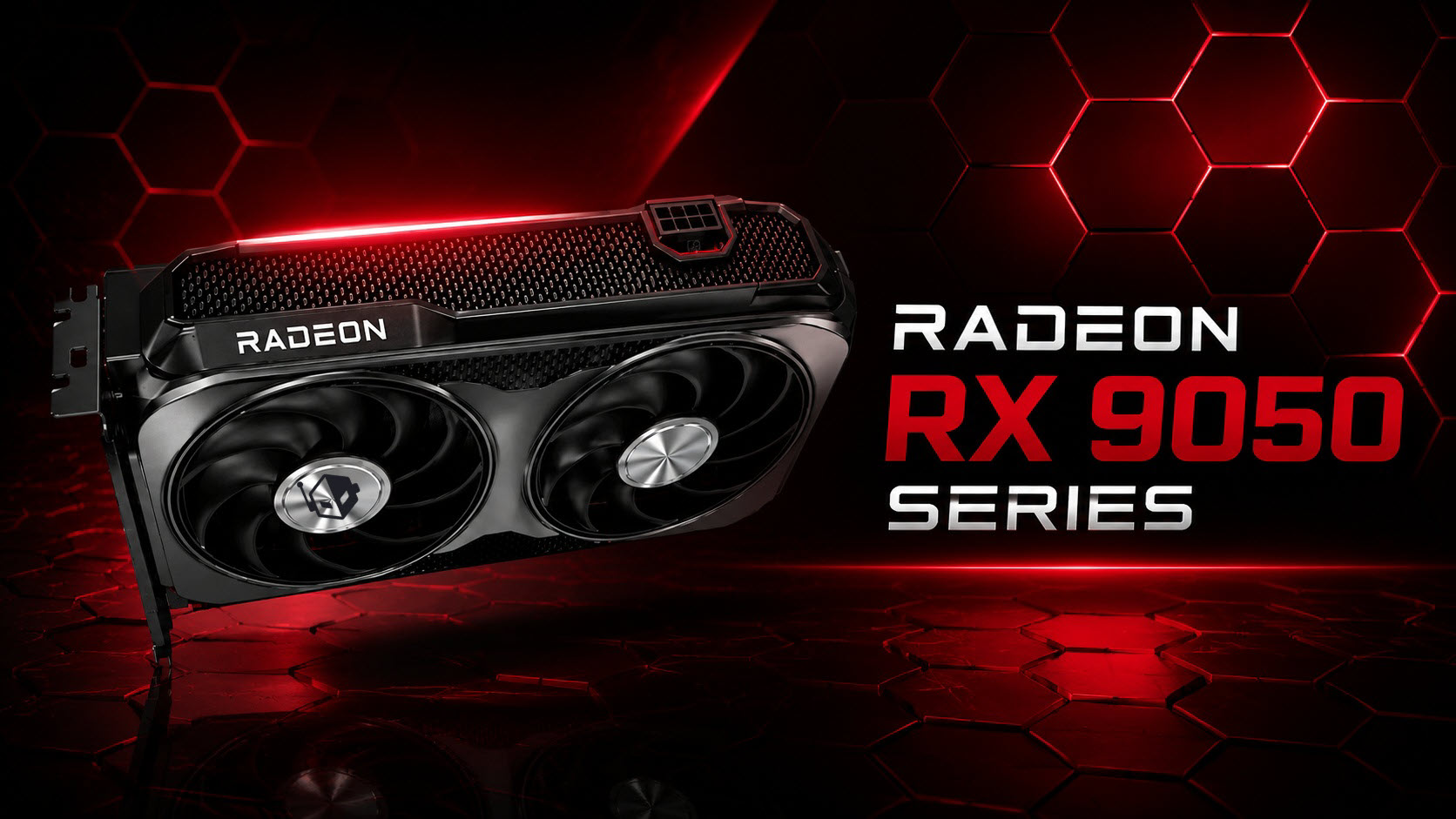
In the middle of a challenging 2026 GPU market marked by rising memory prices and limited new launches, AMD has finally dropped its first desktop graphics card in nearly a year: the Radeon RX 9050. Available in 8GB retail and controversial 4GB OEM flavors, this entry-level RDNA 4 card aims squarely at 1080p gamers who want modern features without breaking the bank or melting their PSUs. Priced at $279 for the 8GB model and initially rolling out in Latin America and Asia-Pacific regions, it promises efficient performance, full FSR Redstone support, and compact dual-slot designs from partners like ASRock and Sapphire.
But is the RX 9050 a smart budget buy or a step backward? Early independent testing paints a mixed picture—impressive efficiency paired with performance that lags Nvidia's competing RTX 5050. Add in the eyebrow-raising return of 4GB VRAM configurations in 2026, and this review gets complicated. Let's break down the specs, real-world results, pros, cons, and whether it deserves a spot in your build.
Specs, Design, and the 4GB Controversy
At its heart, the RX 9050 uses a cut-down Navi 44 GPU (sometimes called Navi 44 XE) fabricated on TSMC's 4nm process. It packs 16 Compute Units for 1,024 stream processors, 16 third-gen Ray Accelerators, 32 AI Accelerators, 64 texture units, and 64 ROPs. Clocks hit a game frequency of 1,920 MHz and boost up to 2,600 MHz (some partner cards push higher). Peak FP32 performance sits at 10.6 TFLOPs.
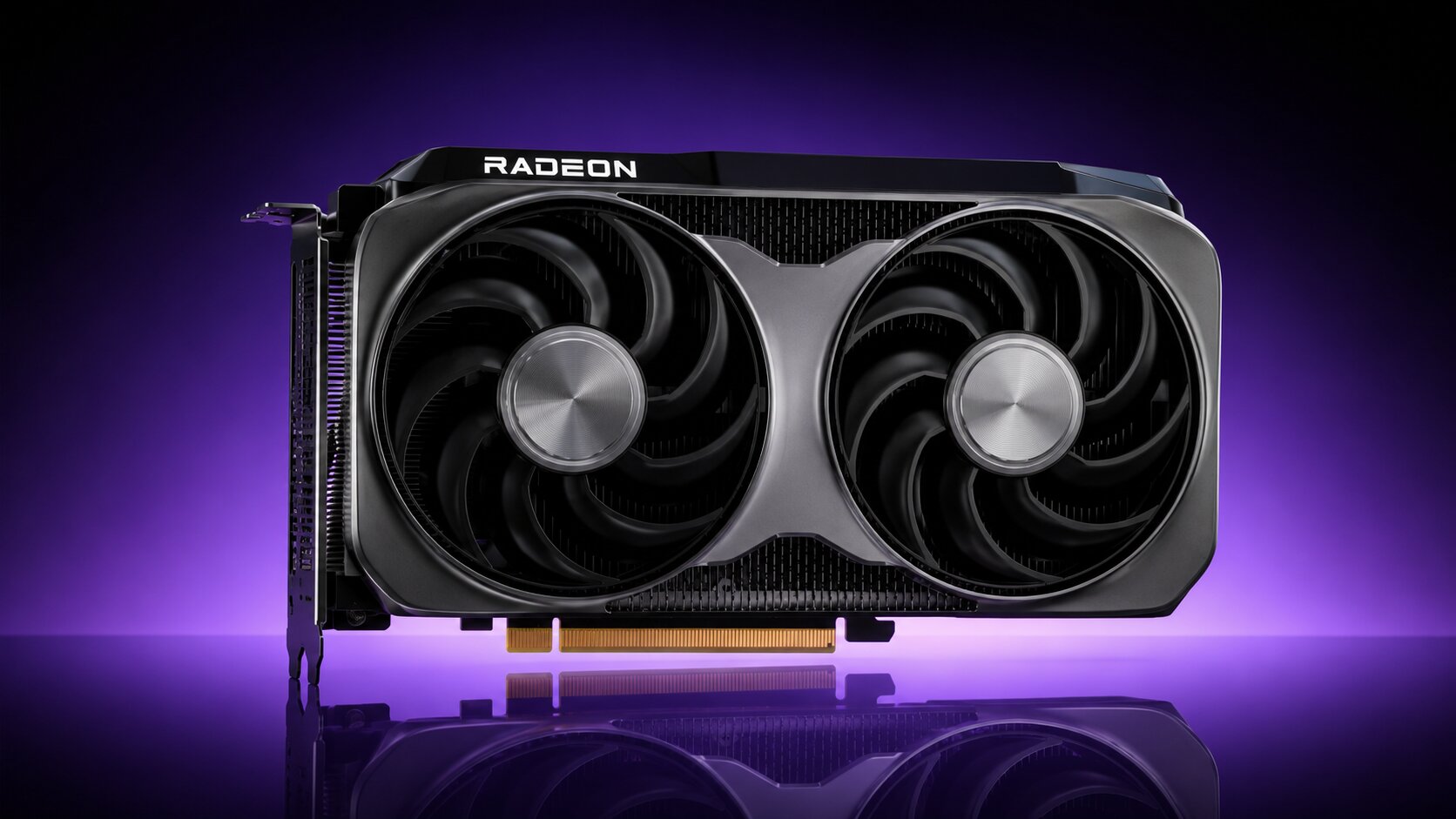 Image: notebookcheck.net
Memory is the big differentiator. The retail 8GB GDDR6 version runs on a 128-bit bus at 18 Gbps for 288 GB/s bandwidth, backed by 32 MB of Infinity Cache. The 4GB OEM-only variant halves the bus to 64-bit (144 GB/s) and is strictly for pre-built systems—AMD has confirmed no retail plans. Typical board power is a thrifty 92W (some partners list around 100W), requiring just one 8-pin connector and a 450W PSU recommendation. Cards are compact dual-slot, dual-fan designs under 250mm, perfect for SFF or budget builds. Outputs include DisplayPort 2.1a and HDMI 2.1b, with full AV1 encode/decode support.
The 4GB version has drawn heavy criticism. AMD itself called out insufficient 4GB VRAM years ago, yet here it is in 2026 under the same product name. Buyers of pre-builts must carefully check specs to avoid the crippled bus and capacity that will struggle with modern textures. It's a clear miss on transparency.
Performance and Benchmarks: Solid Efficiency, Soft Absolute Numbers
AMD positions the RX 9050 for 1080p medium settings, citing numbers like 96 FPS in Cyberpunk 2077, 131 FPS in Forza Horizon 6, 60 FPS in 007: First Light, and hundreds of FPS in esports titles such as Valorant—all on a high-end Ryzen 7 9800X3D testbed. Take those with a grain of salt, as real-world systems will see lower figures and FSR usage isn't always clear.
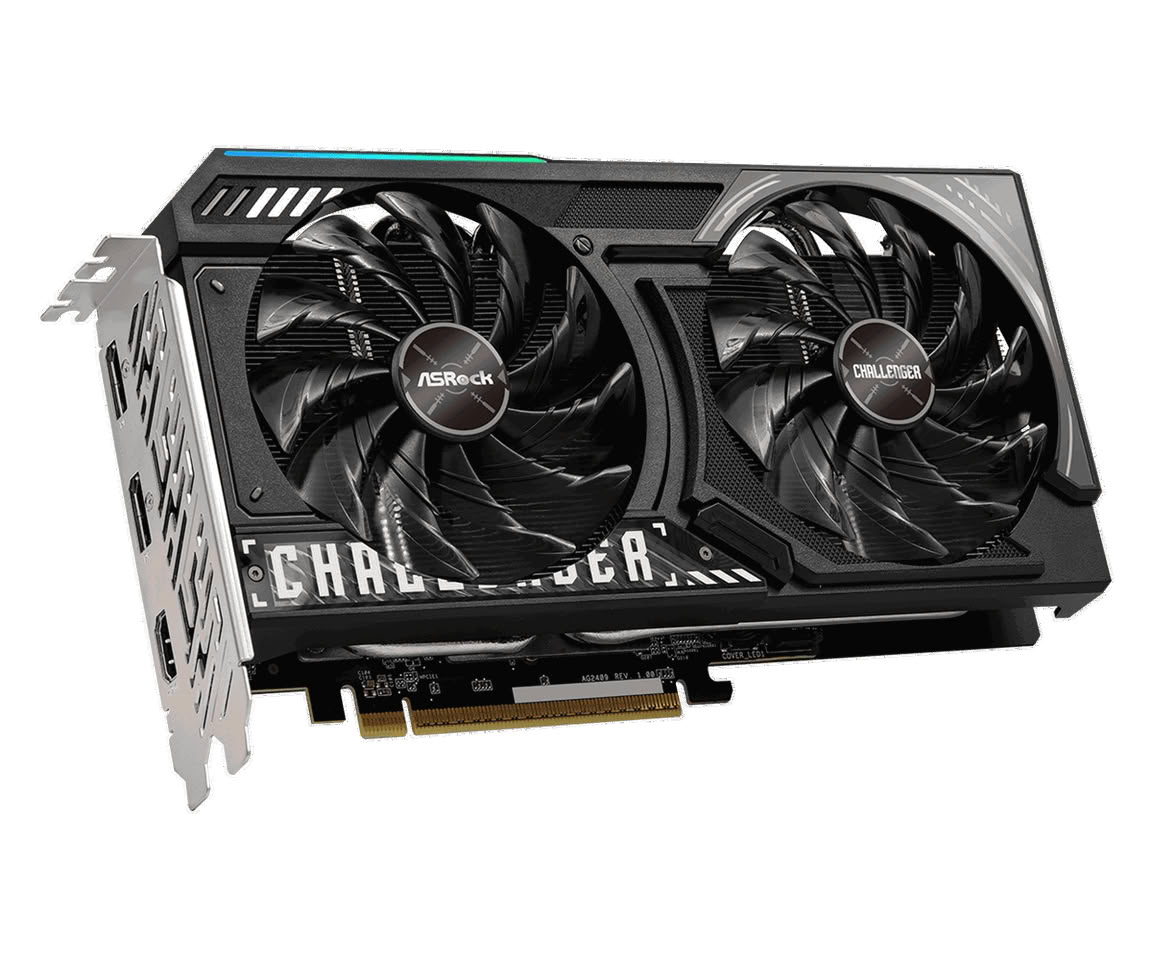 Image: techpowerup.com
The first detailed third-party review from Japan's Hermitage Akihabara (testing an ASRock Challenger 8GB against a GeForce RTX 5050) is more revealing. In 3DMark, the RX 9050 trailed by about 18% overall, with larger gaps in ray-traced tests (25-27% behind in Port Royal and Speed Way). In games, the deficit averaged around 30% when accounting for fairer comparisons (excluding scenarios where DLSS Multi-Frame Generation heavily favored Nvidia). Esports and lighter titles showed smaller gaps, and the cards occasionally matched at higher resolutions with heavy upscaling. Notably, the Radeon ran cooler (peak ~56°C GPU) and sipped less power—system load around 182W versus 217W for the RTX 5050.
Ray tracing is functional thanks to RDNA 4 hardware and FSR Redstone's neural denoising (Ray Regeneration), but raw performance lags. Rasterization at 1080p medium/high is playable for many titles, especially with FSR upscaling and ML frame generation. 1440p is a stretch outside lighter games or aggressive upscaling. The 8GB VRAM holds up for current 1080p but feels future-proofing-limited as games grow hungrier. The 4GB OEM version would fare far worse.
Compared to older cards, it should handily beat last-gen entry options while offering superior efficiency and features over something like a used RX 7600 in the feature department (full Redstone suite vs. partial backports).
Features, Value, and Practical Tips
Where the RX 9050 shines is the software stack. Full FSR "Redstone" support brings ML-based upscaling, frame generation, ray regeneration, and radiance caching—advantages over RDNA 3. Anti-Lag 2, HYPR-RX, FreeSync, AV1, and strong multi-monitor support round it out. Power efficiency and low heat make it ideal for small form factor PCs, HTPCs, or quiet builds. Partner cards from ASRock Challenger and Sapphire Pulse emphasize compact coolers.
At $279 MSRP, value is debatable. The RTX 5050 has a lower $249 MSRP (though often selling higher around $300+ amid market pressures). If street prices favor the AMD card and you prioritize efficiency or FSR ecosystem, it works. For pure performance-per-dollar at 1080p, Nvidia currently looks stronger based on early data. Limited initial availability outside certain regions further hurts.
Practical tips:
- Pair with a mid-range CPU like a Ryzen 5 7600 or equivalent—don't expect AMD's flagship test results.
- Enable FSR Redstone and HYPR-RX for the best experience in supported titles (over 75 games already).
- If buying a pre-built "RX 9050" system, verify 8GB VRAM explicitly—avoid 4GB.
- Excellent for esports, older AAA, or medium settings; look higher (RX 9060 series) for demanding ray-traced or 1440p gaming.
- Driver support via Adrenalin should be solid given the mature RDNA 4 architecture.
- Monitor regional pricing and stock; North America/Europe launches lag.
Pros and Cons
Pros:
- Excellent power efficiency (92W TBP) and cool, quiet operation
- Compact dual-slot designs ideal for SFF
- Full modern feature set: FSR Redstone ML suite, AV1, DP 2.1a
- Affordable entry into RDNA 4 at $279
- Strong esports and 1080p medium performance potential
Cons:
- Trails RTX 5050 by ~18-30% in early tests
- Controversial 4GB OEM variant with halved bus under same name
- 8GB VRAM and performance ceiling limit longevity and higher settings/resolutions
- Limited initial availability and no broad NA/EU launch yet
- Weaker raw ray tracing without heavy upscaling reliance
Final Verdict
The AMD Radeon RX 9050 is a competent, highly efficient 1080p card that brings welcome RDNA 4 features and low power draw to the budget segment. For quiet SFF builds, esports-focused rigs, or buyers who value FSR Redstone and don't need maximum frames, the 8GB version has appeal—especially if priced competitively against inflated RTX 5050 stock. However, the soft absolute performance versus Nvidia, the baffling 4GB OEM naming fiasco, and questions around long-term VRAM headroom keep it from greatness.
In a market hungry for affordable options, it's a solid if unspectacular addition rather than a must-buy. Wait for broader availability, more independent reviews, and street pricing clarity before pulling the trigger. If efficiency and modern AMD software are priorities and you stick to 1080p medium with upscaling, it delivers. Otherwise, shop carefully against the competition or stretch for a higher RX 9000-series SKU. The RX 9050 keeps the budget flame alive in 2026, but it flickers more than it roars.