 Image: tomshardware.com
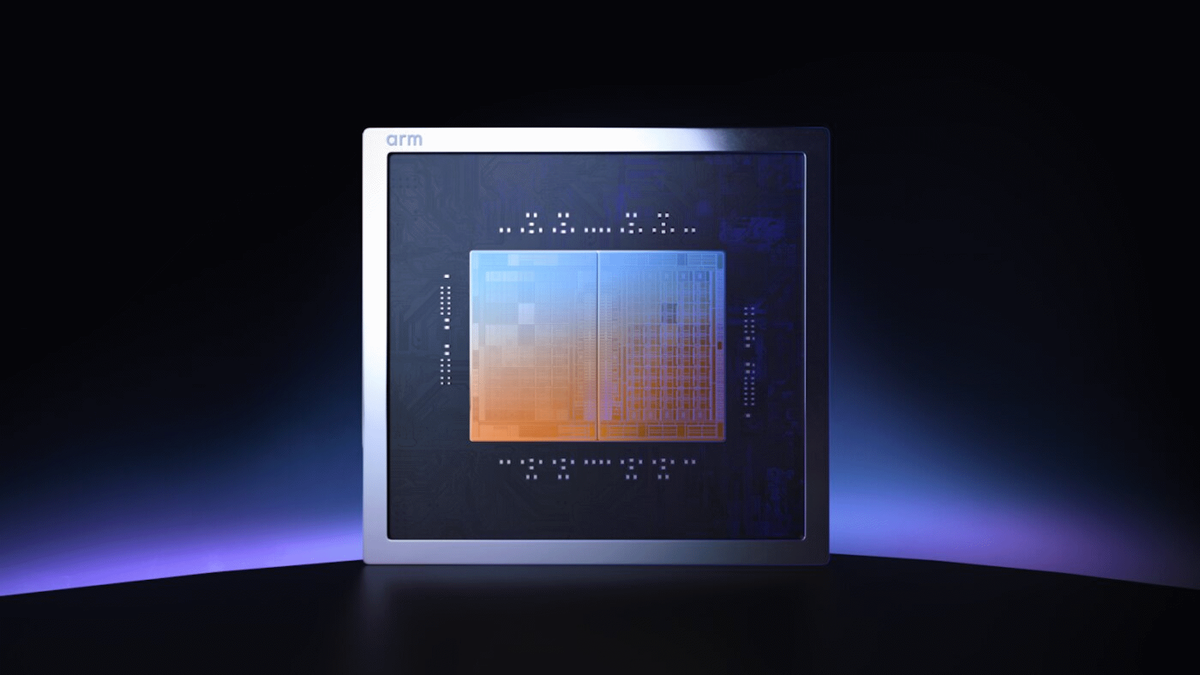
As artificial intelligence reshapes the computing landscape, Arm Holdings is making its boldest move yet. On March 24, 2026, the company unveiled the Arm AGI CPU – its first-ever production processor designed and sold directly by Arm. This isn't just another chip announcement; it's a fundamental shift in strategy for the Cambridge-based firm, traditionally known for licensing its energy-efficient architecture rather than manufacturing silicon itself.
With Meta Platforms as the lead development partner and first major customer, the AGI CPU targets the exploding demands of "agentic AI" – AI systems that can reason, plan, and act autonomously at scale. CEO Rene Haas called it a "defining moment" for the company, and investors agreed: Arm shares surged more than 15% following the news.
The Historic Pivot: From IP Licensor to Silicon Provider
For over three decades, Arm has dominated mobile and embedded computing through its licensing model, powering everything from smartphones to the AWS Graviton and Google Axion processors. But the rise of AI data centers has changed the game. Hyperscalers and AI companies are demanding ready-to-deploy solutions that can be implemented quickly at massive scale.
 Image: finance.yahoo.com
The AGI CPU extends Arm's Neoverse platform beyond intellectual property and Compute Subsystems (CSS) into full production silicon. This gives customers three paths: license the IP and build their own, use Arm's CSS building blocks, or purchase complete Arm-designed processors. The move responds directly to partner requests for faster deployment of Arm-based AI infrastructure.
Arm developed the chip in its new $71 million chip design lab in Austin, Texas. Production is handled by TSMC on its advanced 3nm process. Commercial systems from partners including Supermicro, Lenovo, and ASRock Rack are available for order now, with broader deployments expected in the second half of 2026.
Technical Deep Dive: Inside the Arm AGI CPU
The AGI CPU packs up to 136 Arm Neoverse V3 cores per processor, spread across a dual-chiplet design. These cores deliver leading single-threaded performance, running at up to 3.7 GHz in boost mode and 3.2 GHz all-core. Each core gets a dedicated 2MB of L2 cache, with an additional 128MB of shared system-level cache.
 Image: theregister.com
Memory performance is a standout feature: the chip supports 12 channels of DDR5-8800 memory, providing over 800 GB/s of aggregate bandwidth – roughly 6GB/s per core – with sub-100ns latency. This is crucial for AI workloads that require rapid data access. On the I/O side, it offers 96 lanes of PCIe Gen6 plus native CXL 3.0 support for memory expansion and composable infrastructure.
Power consumption is rated at a 300-watt TDP, enabling impressive density. In air-cooled racks, a configuration can deliver over 8,000 cores per rack. Liquid-cooled designs push this to more than 45,000 cores per rack. Arm claims more than 2x the performance per rack compared to the latest x86 systems on industry-standard workloads, thanks to higher core counts, better efficiency, and sustained performance without thermal throttling.
The design prioritizes "deterministic performance" for agentic workloads, where each thread gets a dedicated core to avoid contention. This makes it ideal for orchestrating AI agents, managing accelerators, handling inference orchestration, and running control plane operations in large-scale AI factories.
Agentic AI: Why CPUs Matter Again in the Data Center
The timing of this launch aligns perfectly with the evolution of AI from training massive models to deploying swarms of intelligent agents. As companies move beyond simple chatbots to autonomous AI systems that continuously interact with tools, databases, and each other, the CPU becomes the critical orchestrator.
Traditional GPUs excel at parallel matrix math for training and inference, but agentic AI requires low-latency, responsive general compute for planning, reasoning, tool use, and coordination. Arm's chip addresses this "CPU bottleneck" that hyperscalers are increasingly facing.
Meta, which has invested heavily in custom silicon like its MTIA accelerators, co-developed the AGI CPU to improve data center performance density. The partnership supports a multi-generation roadmap, signaling long-term commitment. Other early supporters include OpenAI, Cloudflare, Cerebras, SAP, and SK Telecom, spanning inference optimization, networking, and enterprise AI applications.
Practical insight for IT leaders and AI infrastructure planners: Power efficiency is becoming the primary constraint in data center expansion. Arm's approach promises up to $10 billion in potential CAPEX savings per gigawatt of AI capacity through higher density and lower power draw. Organizations building or expanding AI clusters should evaluate Arm-based solutions alongside traditional x86 and GPU-heavy architectures, especially where total cost of ownership and sustainability goals matter.
Industry Impact and the Broader Arm AI Ecosystem
This announcement doesn't replace Arm's licensing business – it complements it. The company continues pushing its Ethos NPUs for edge AI (including the latest Ethos-U85 for transformer networks on-device) and Neoverse IP for custom chips from partners like NVIDIA, AWS, Google, and Microsoft.
However, by selling its own chips, Arm is directly competing in the data center silicon market while validating the architecture for others. The mature software ecosystem – with over 1.25 billion Neoverse cores already deployed and 15+ years of investment – gives it a significant advantage over newer entrants.
For developers and engineers, the news means more standardized Arm-based AI platforms to target. The reference server design is being contributed to the Open Compute Project, promoting openness and faster adoption. Tips for software teams: Leverage existing Arm toolchains and optimization guides when preparing workloads. The combination of high core counts and efficient memory should yield excellent performance on parallel agent tasks.
Stock reaction and revenue projections underscore the market's excitement. Analysts and the company itself project the AGI CPU line could contribute roughly $15 billion in annual revenue within five years, helping push total company revenue toward $25 billion.
What Comes Next for Arm in AI
Arm isn't stopping here. A second-generation AGI CPU is reportedly targeted for 2027, with a third generation already in development. The company is also advancing its neural technology for GPUs and continues expanding its AI platform across client, edge, and infrastructure segments.
This launch represents more than a new product – it's Arm asserting leadership in the AI-native data center era. By delivering production silicon optimized for the exact workloads defining the next wave of innovation, Arm is positioning itself at the center of the AI infrastructure stack.
As data centers evolve into massive AI factories, the combination of power efficiency, high core density, and software compatibility that Arm has long championed may prove decisive. The AGI CPU gives hyperscalers, cloud providers, and AI startups another powerful option built on the world's most popular compute architecture.
The next few months will be telling as early systems ship and real-world benchmarks emerge. But one thing is clear: the era of Arm-powered AI infrastructure just got a major boost. For anyone involved in technology and innovation, keeping a close eye on Arm's expanding role in AI hardware is now essential.