 Image: techtimes.com
SpaceX is lining up the most ambitious Starship flight of the program so far. Flight 15 has not launched yet, but company leadership has now put a clear objective on the record: catch both stages of the world’s largest rocket on the same mission. On SpaceX’s third-quarter earnings webcast on October 20, 2026, Elon Musk said the flight is expected next month and that SpaceX will attempt to catch both the Super Heavy booster and the Ship.
If that double catch works, Musk said it would be the first time an orbital launch vehicle has been fully recovered. He called the odds of success on this first try “more likely than not,” while stressing that success is not guaranteed. That combination — a near-term window, a first-of-its-kind recovery plan, and an explicit acknowledgment that the attempt can fail — is the story of Starship Flight 15 as of October 22, 2026.
When Flight 15 is expected to launch
SpaceX has not published an official launch date, time, or mission page for Flight 15. What exists are forecasts, and they have already moved once.
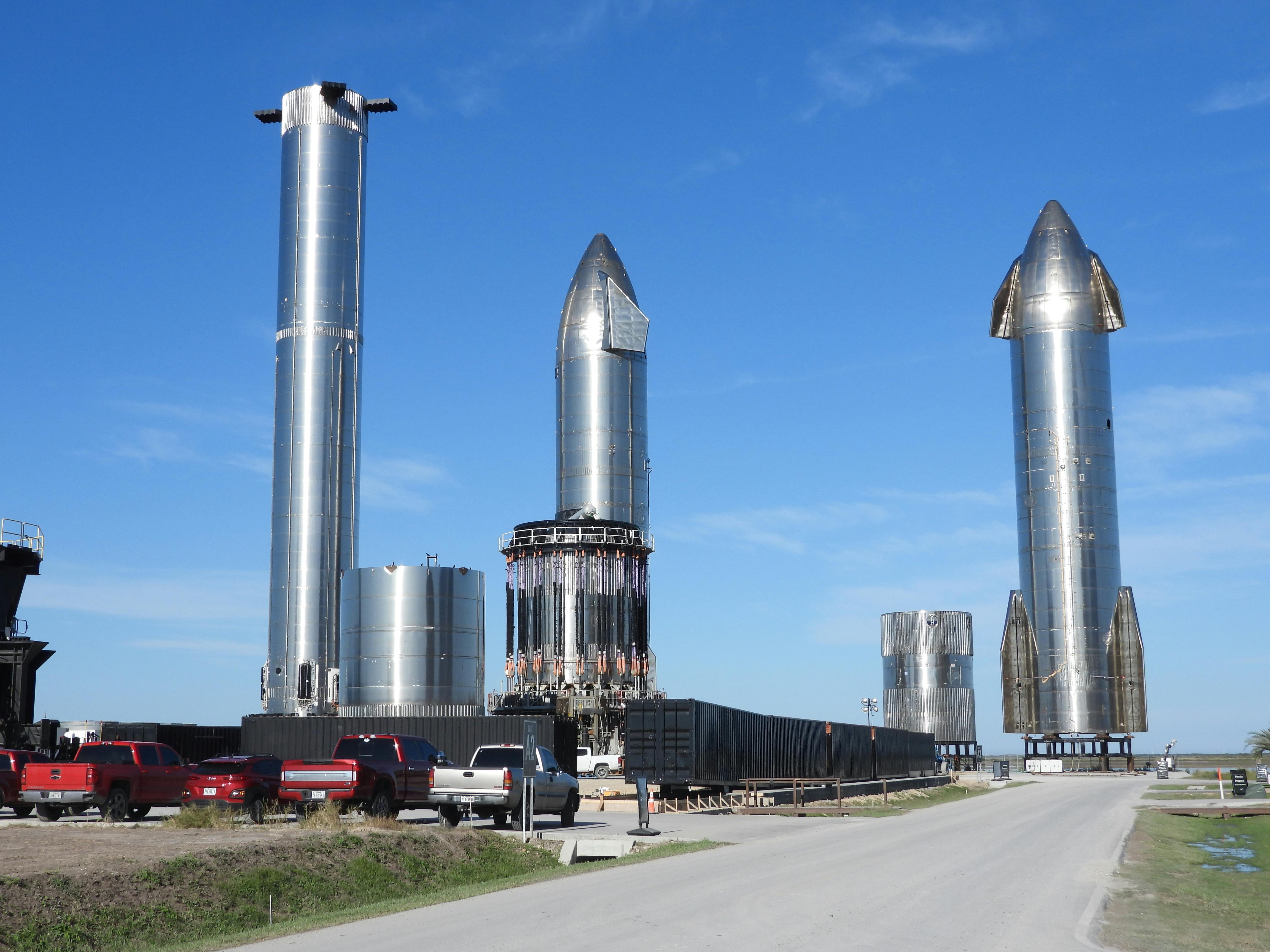 Image: keeptrack.space
Earlier air-traffic planning material had pointed to a provisional no-earlier-than date of October 19. That target slipped. The latest CADENA planning slide, used by air-traffic managers and circulated by Starbase trackers, lists Flight 15 as no earlier than November 8, 2026, from Starbase, Texas. Those slides are coordination tools, not launch commitments.
Musk’s own comments point to the same month. On October 10, at the X Takeover event at Giga Texas, he said the flight was hopefully four to six weeks away and likely a little before Thanksgiving, which falls on November 26. On the October 20 earnings call he narrowed the public guidance only to “next month.” Independent launch databases still list the mission as to be determined in the fourth quarter of 2026.
The flight also still needs a Federal Aviation Administration license modification. Flight 14’s license does not automatically cover a mission that returns the Ship to the launch site instead of splashing it down at sea. Until SpaceX posts a window and the FAA posts an approval, November 8 should be treated as a planning marker, not a countdown.
The objective: catch the booster and the Ship
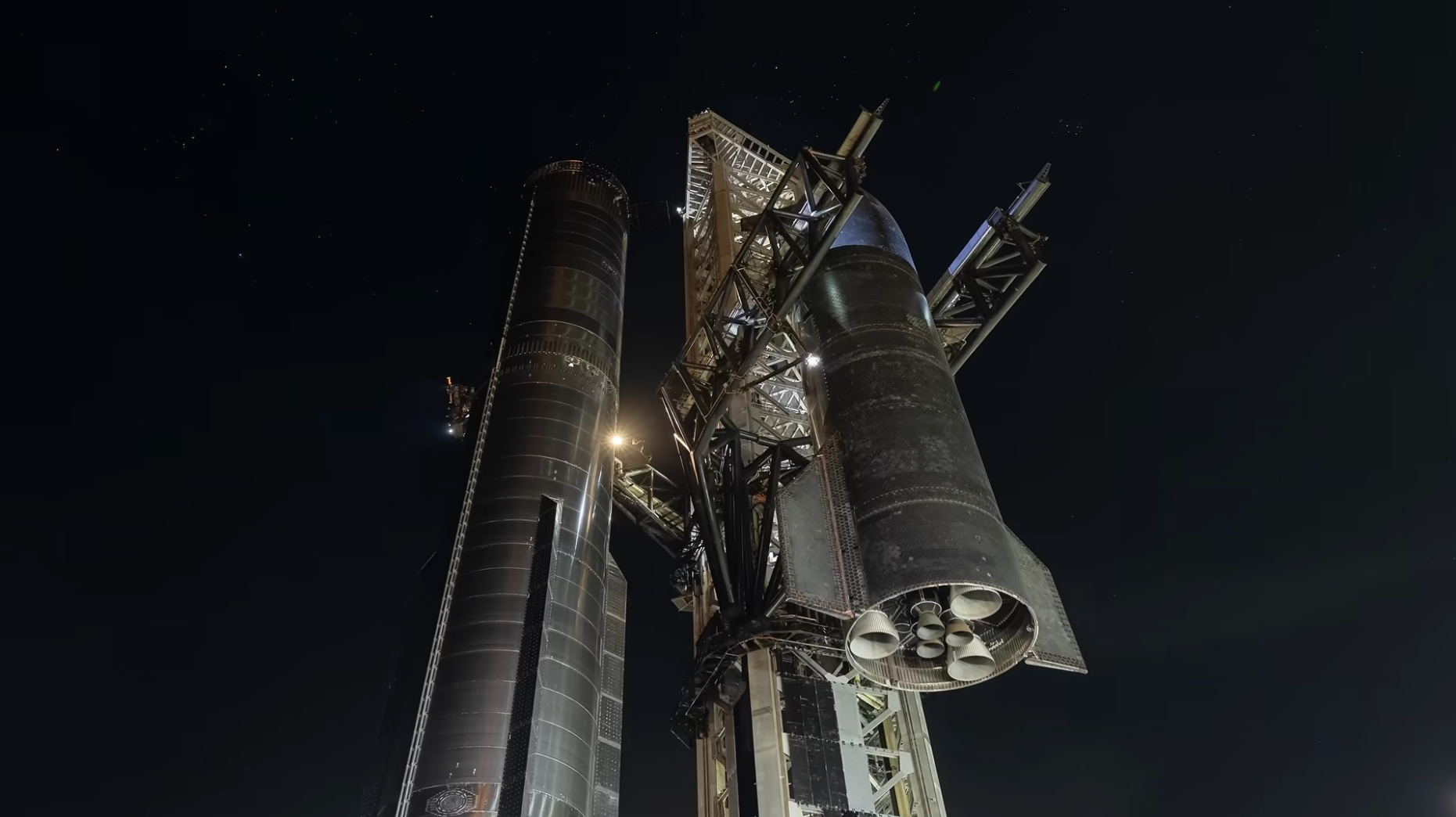
The headline goal is a dual tower catch at Orbital Launch Pad 2. Super Heavy would return to the Mechazilla arms in the same general manner as earlier booster catches. Ship 42 would come back from orbit, fly a belly-flop reentry, flip vertical over Starbase, and be caught by the same tower before it reaches the ground.
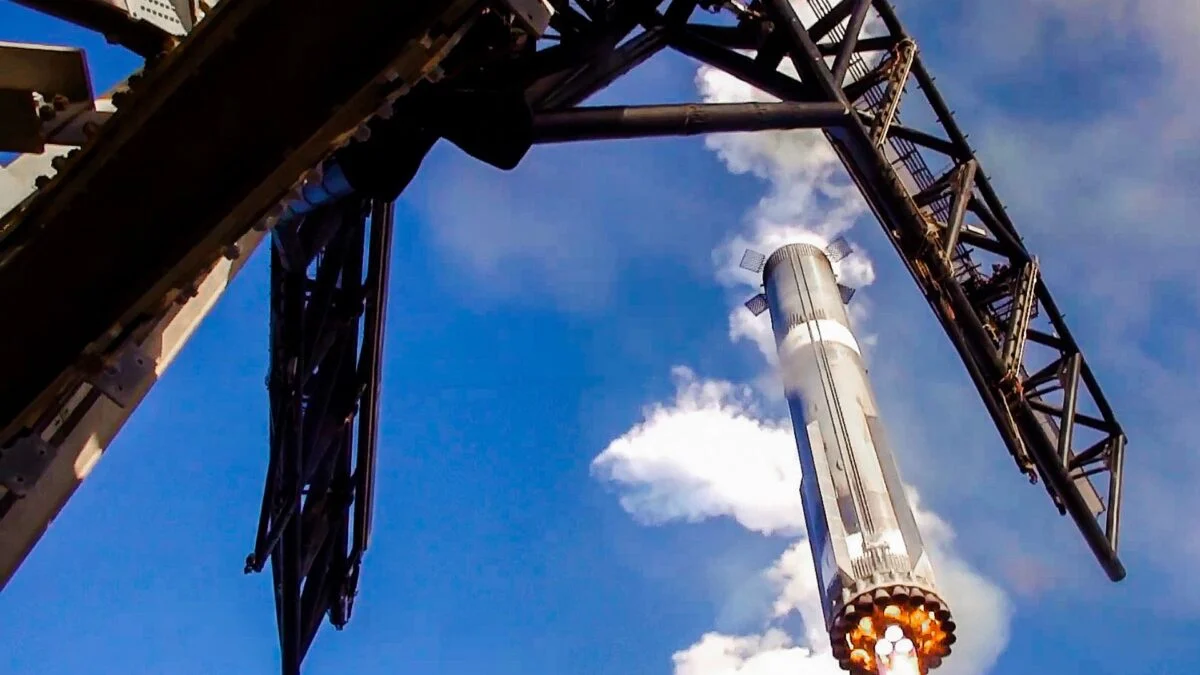 Image: gizmodo.com
That second half has never been done. SpaceX has caught Super Heavy boosters since Flight 5 on October 13, 2024. Every Starship upper stage so far has ended in the ocean. During the October 20 webcast, SpaceX played a roughly 80-second animation of the planned Ship catch: the vehicle steers with its flaps, swings upright over the pad, drops past the top of the tower, and is held by the chopstick arms.
Musk has framed a success as a profound technology milestone because both stages would come back intact to the launch site, with no large expendable tank thrown away. The Space Shuttle orbiter and its solid rocket boosters were recovered, but the external tank was discarded on every flight. A clean Flight 15 would be a different kind of full recovery: both stages of an orbital-class rocket returned to the tower and, in principle, available for inspection and another flight.
In September, before Flight 14 flew, Musk put the odds of a first Ship-catch attempt at least at 50 to 60 percent if that mission went well. On October 20 he updated the public estimate to “more likely than not,” and said SpaceX has a steady stream of Starship attempts scheduled through the end of the year if Flight 15 does not stick the catch.
SpaceX has not publicly detailed Flight 15’s payload or the exact orbital profile. The working expectation among trackers is a low Earth orbit mission from Pad 2, followed by the return attempts. Any payload announcement, and any decision to shorten the coast the way Flight 14 was shortened, will only be clear once SpaceX publishes the mission profile.
The vehicles, and what still has to happen
Independent Starbase trackers identify the Flight 15 stack as Booster 22 and Ship 42, the fourth pair of Block 3, or Version 3, vehicles. SpaceX has not formally confirmed that pairing on a mission page, but it is the assignment used by NASASpaceflight, Wikipedia, and on-site photographers, and it is consistent with how the vehicles have been tested.
- Booster 22 completed cryogenic proof testing at Massey’s in September and is believed to have its engines installed. It was waiting in Mega Bay 1 for transport to Pad 2 for a pre-launch static fire. A planned move around October 19–20 was cancelled.
- Ship 42 was lifted by the Pad 2 chopsticks on September 11–12 and held in a simulated catch position, including a practice mate with the ship quick-disconnect arm. Its engines were later removed, and it returned to Massey’s for an additional cryoproof.
- Pad 2 ran a full deluge test around October 20. The water system that protects the pad at engine start has been exercised; the booster has not yet been static-fired on it for this campaign.
The engine removal on Ship 42 lines up with lessons from Flight 14. Musk has described the Raptor Vacuum shutdown on that flight as a software glitch isolated to one engine computer, not a fleet-wide hardware failure. He has also said this round of vehicle changes is smaller than some earlier ones, but that some updates still require crews to go inside the tanks. Either the software work, the internal modifications, or both could explain why Ship 42’s engines came off before another cryoproof.
As of October 21, the public checklist was still open: booster static fire at Pad 2, Ship 42 engine reinstall and its own static fire, an FAA license for a return-to-launch-site profile, payload loading if there is a payload, and a wet dress rehearsal. Flight 14’s full stack did its fueling rehearsal four days before launch. Nothing like that timeline has been posted for Flight 15.
What Flight 14 changed — and what it did not
Flight 15 only makes sense against Flight 14, which flew on September 28, 2026. Booster 21 and Ship 41 lifted off from Pad 2. Despite an early Raptor Vacuum shutdown on the Ship and engine trouble on the booster, Ship 41 reached orbit — the first time Starship has done so — and deployed all 26 Starlink V3 satellites it carried. SpaceX then cut short a planned roughly 10-hour, multi-orbit coast. The Ship deorbited after about three hours and splashed down in the Pacific north of Hawaii. The booster completed a controlled splashdown in the Gulf of Mexico. No catch was attempted.
That flight proved orbital insertion and operational satellite deployment on a Block 3 stack. It did not prove a clean engine-out-free ascent, a full-duration coast, or tower recovery of either stage. The FAA did not open a mishap investigation into Flight 14, which cleared a procedural path forward, but the license still has to be modified before Flight 15 can fly a different ending.
Ship 40, recovered from an ocean landing on an earlier flight and brought back to Starbase by sea, is a reminder of the gap a catch is meant to close. Soft splashdowns can return hardware for inspection. They do not deliver the rapid reuse SpaceX needs if Starship is going to fly often enough to matter for Starlink, NASA’s lunar lander work, or eventual Mars missions.
What’s next, and how to follow the attempt
A successful double catch would open the door to the milestone Musk has already named: reflying a booster and a Ship that have actually been recovered. He has suggested vehicles caught on Flight 15 could, in a best case, fly again soon after. NASASpaceflight’s read of the hardware flow is more cautious. Flight 16 is currently associated with Booster 23 and Ship 43, aimed at December, and is a candidate to become the first Starship launch from Launch Complex 39A in Florida. That campaign would require barging both stages to Kennedy Space Center, checks at Roberts Road, and a first-time pad flow at 39A, including booster tanking tests and a static fire. It is unlikely to wait for a full post-catch teardown of whatever Flight 15 brings home.
The 2026 cadence stays modest either way. If Flight 15 flies in November and Flight 16 in December, SpaceX would finish the year with five Starship launches, a number shaped by the transition from earlier vehicles to Block 3. Musk has said the company expects weekly Starship flights at some point in the first half of 2027, with a faster pace later in the year. Separately, the FAA has opened a review of a SpaceX proposal that could eventually allow up to 100 Starbase launches a year in a first phase and as many as 456 later, with a matching increase in landings. Public meetings are set for mid-November. None of that higher rate is approved, and Phase 1 is not expected for at least a year.
For anyone tracking the flight from outside the fence line, the useful signals are public and sequential:
- Road-closure notices around Starbase, often the first sign a booster is rolling to the pad.
- Static-fire reports from SpaceX or the live cameras at Pad 2 and Massey’s.
- An FAA license update on the agency’s Starship page.
- Airspace and maritime hazard notices for the launch corridor and the return path over land, which a Ship catch requires.
- A SpaceX mission page with a window and a webcast link. That is the only date that counts as official.
Dates will keep moving until those boxes are checked. Musk has been blunt about why: SpaceX is still changing the rocket between flights, and some of those changes take real time inside the tanks. Flight 15 is the first realistic attempt to close the reuse loop on both stages. Until the stack is on the pad, static-fired, and licensed, the result is still unwritten — and that is the most important fact in the Flight 15 story right now.